The brains of hearing-aid users showed which voice they were attending to
Two analyses distinguished the attended voice in 31 hearing-aid users. The newer one reduced a distortion in the coherence measure.
The key idea
Both methods distinguished the attended voice from the ignored one, and the new method reduced a measurement distortion.
The study, in plain language
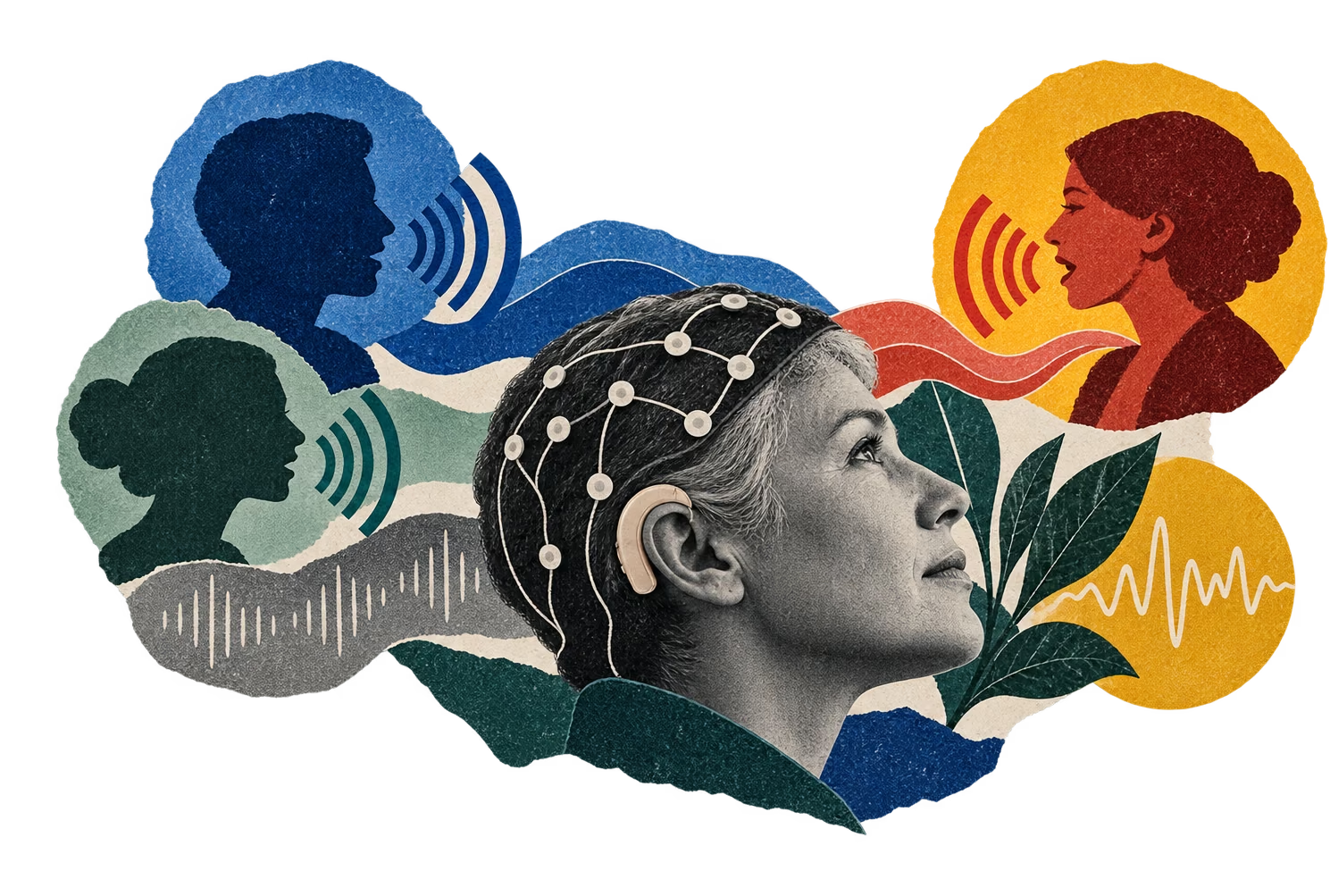
Following one voice among several can be difficult, especially with background noise. To study how to record that attention, the team analyzed data from people with hearing loss who already used hearing aids while listening to two speakers.
Both the traditional analysis and the new measure distinguished the attended voice from the ignored one. The new measure produced a less noisy signal and varied with the hearing aid’s noise-reduction settings, which could be useful in future technology assessments. For now, the study did not show that changing a setting improves each person’s understanding.
What they found
- Both methods distinguished the attended voice from the ignored voice.
- The new method reduced a bias that could inflate the coherence measure between speech and brain activity.
- The measure’s patterns varied with the hearing aid’s noise-reduction setting, although no firm statistical difference was established.
Something to think about
The next time you are in a noisy place, notice how you focus on one voice. This study shows one way to track that choice in the brain, not whether a hearing-aid setting helps someone understand better.
How they studied it
The team compared two ways to analyze recordings of brain electrical activity during a task with two voices and background noise. Experienced hearing-aid users with hearing loss took part, and EEG data from 31 of them were analyzed. The study describes patterns across noise-reduction settings, but does not provide a rigorous test of these differences or measure whether a setting improves each person’s understanding.
What the study cannot show
- Data came from a laboratory task and a sample limited to hearing-aid users with hearing loss.
- A clearer brain signal does not mean the method reads thoughts or that an automatic setting improves each person’s understanding or experience.
The original study
Novel bias-reduced coherence measure for EEG-based speech tracking in listeners with hearing impairment
Source under CC BY 4.0. English adaptation and explanation by PaperFlow, with AI assistance. The text has been reorganized for a general audience; it is not the complete paper and does not imply endorsement by its authors.
One study alone does not represent a field's consensus. Educational content does not replace professional advice. Report a possible error.