Accurately noticing a heartbeat showed no link to momentary anxiety
Healthy students attending to their hearts showed responses in three parts of a brain region. With unsettling situations, the response appeared in just one.
The key idea
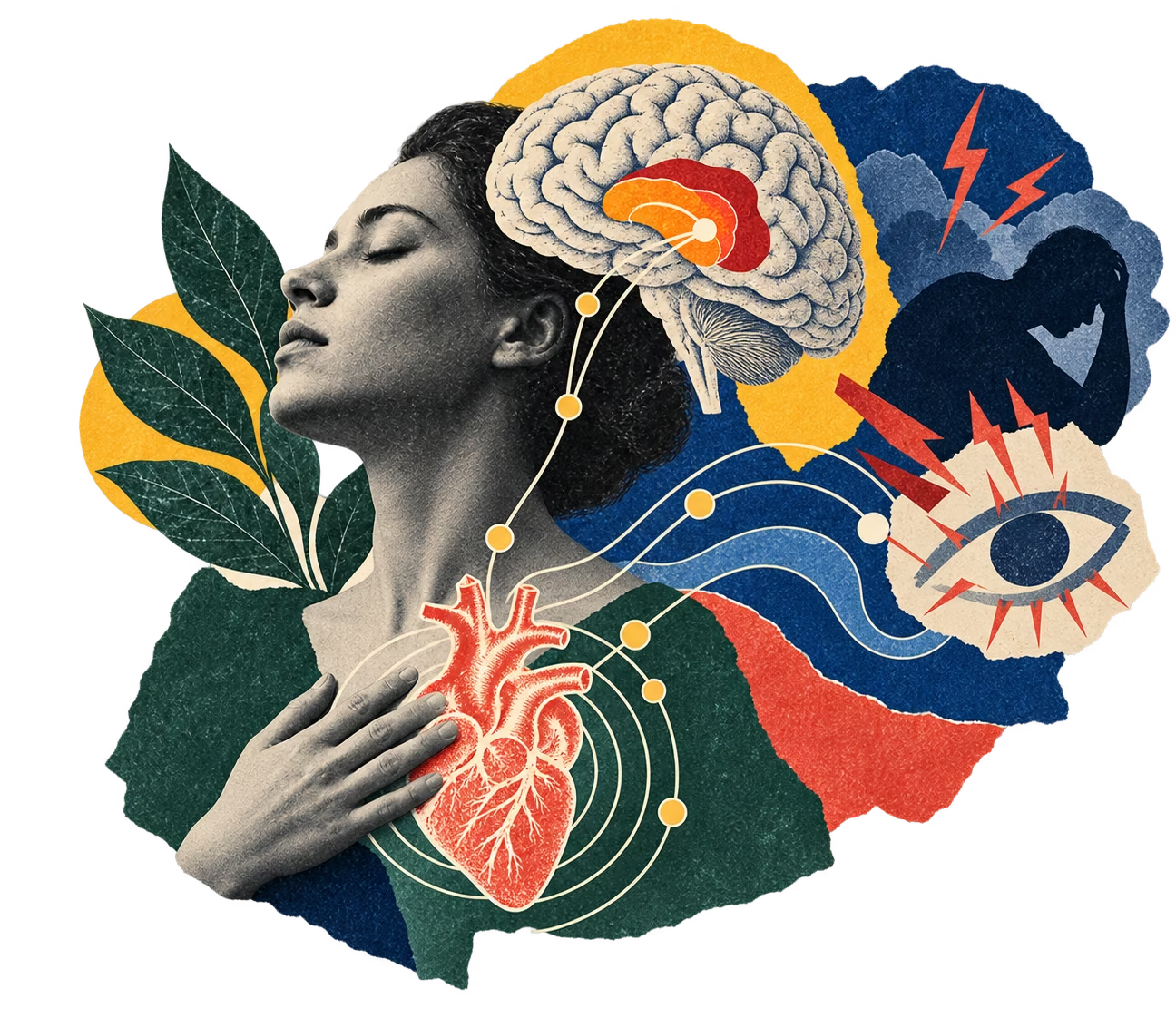
Attending to the heart involved different parts of the insula, and each was associated differently with anxiety and heartbeat perception.
The study, in plain language
The body keeps sending signals while we look at or think about something else. To study what happens when we focus on one of them, healthy university students completed tasks focused on their heartbeats and on anxiety-provoking situations during an MRI scan.
Attending to the heart went along with activity in the posterior, middle, and anterior parts of the insula. During the unsettling-situation task, the response appeared in the anterior part. Activity in the front part coincided with anxiety, while activity in the middle part coincided with anxiety and with heartbeat-detection accuracy.
That link between brain signals and questionnaires did not appear in the same way when directly comparing task accuracy with momentary anxiety: no visible relationship emerged. This difference helps separate what each result measures.
What they found
- The insula, a brain region, responded in all three of its parts while participants attended to their heartbeat.
- Activity in the middle insula was associated with heartbeat-perception accuracy and anxiety. The anterior part was also associated with anxiety.
- Noticing the heartbeat more accurately showed no visible relationship with momentary anxiety.
How they studied it
Fifty healthy university students in China were recruited, and 40 contributed data to the behavioral analysis described. During functional MRI, they completed tasks focused on the heart and on anxiety-provoking situations, as well as a heartbeat-perception task and anxiety questionnaires.
What the study cannot show
- The sample was small and consisted of healthy students. The task does not represent every way of noticing the body’s internal signals.
- The observed relationships do not show that attending to the heart causes anxiety, and they cannot diagnose a disorder.
Something to think about
Think of a time you felt your heart during a nervous moment: noticing it and feeling anxious can be different things. In this study of 40 people, noticing the heartbeat more accurately was not linked to greater anxiety in the moment.
The original study
The role of mid-insula in the relationship between cardiac interoceptive attention and anxiety: evidence from an fMRI study
Source under CC BY 4.0. English adaptation and explanation by PaperFlow, with AI assistance. The text has been reorganized for a general audience; it is not the complete paper and does not imply endorsement by its authors.
One study alone does not represent a field's consensus. Educational content does not replace professional advice. Report a possible error.