Older adults tried home sensors: few chose a camera
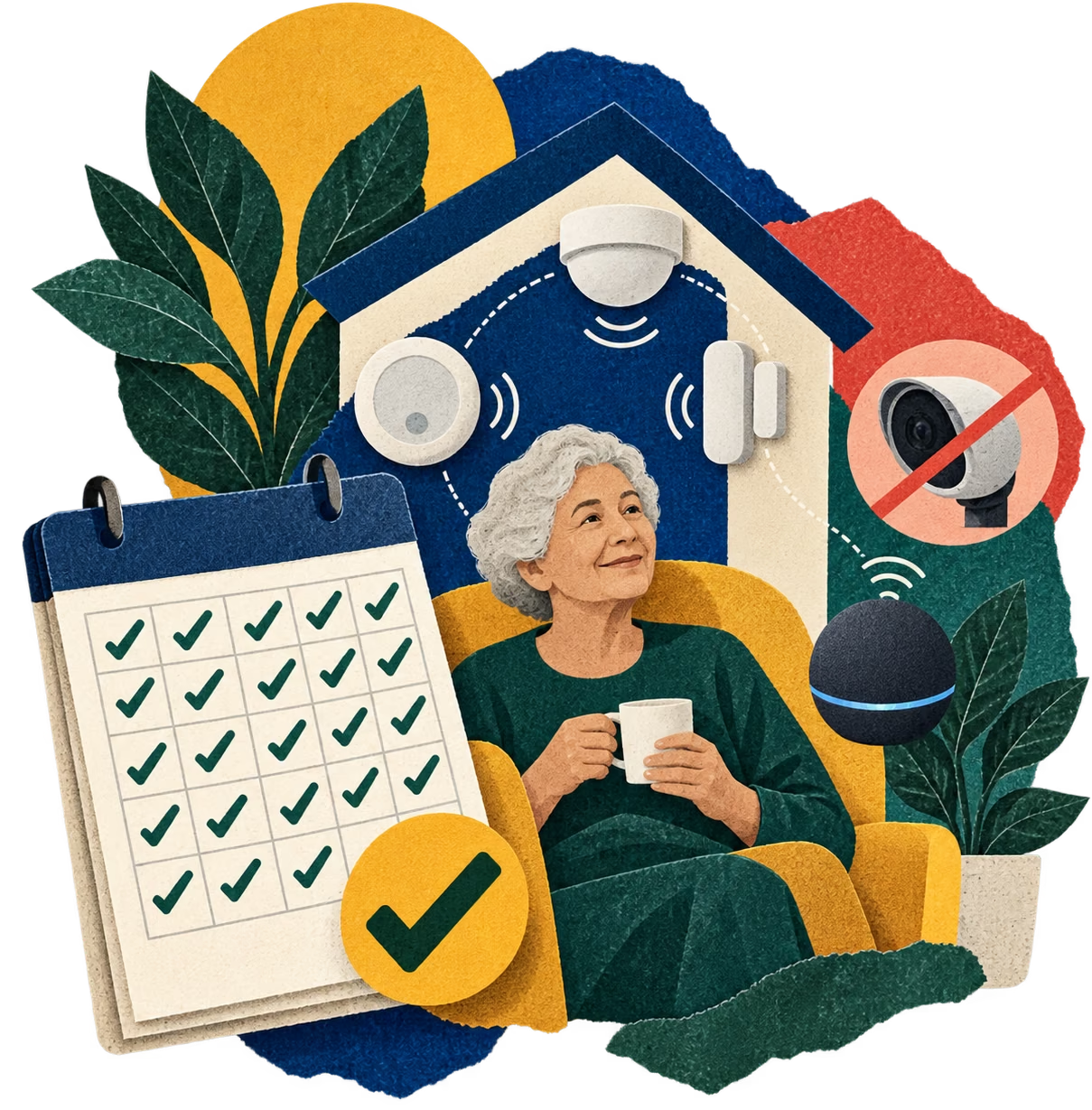
In the second phase, 19 of 22 older adults chose the smart speaker. Three of 22 chose the IP camera.
The key idea
Almost everyone completed the pilot, and in the second phase preferred the speaker and sensor to the camera.
The study, in plain language
A home-sensor project depends on people accepting devices that record what happens in their homes. Over two months, older adults from six residential communities tried several options and discussed their choices with the team.
Most completed the protocol. In the second phase, the smart speaker and multipurpose sensor were the most popular choices, while few people chose to install an IP camera.
When explaining their choices, some mentioned usefulness and curiosity about technology, while others described the camera as intrusive. Privacy and acceptance came together in device choices.
What they found
- In the second phase, the smart speaker and multipurpose sensor were the most popular choices.
- Few people chose a camera in either phase.
- Some people viewed the camera as intrusive. Others mentioned usefulness and curiosity about technology.
How they studied it
A two-month feasibility pilot with older adults who had internet access in six residential communities in Puget Sound, United States. Participants chose connected devices and took part in interviews and assessments.
What the study cannot show
- A small sample from one region, with a high education level and no Medicaid beneficiaries; an internet connection was required, excluding offline households. Observation lasted two months, only four devices were offered, and the pilot was not designed to detect changes in health outcomes.
- That these devices improve health or prevent incidents, that all older adults will accept them, or that the results generalize to other populations, regions, or commercial uses.
The original study
Use of an Internet-of-Things Smart Home System for Healthy Aging in Older Adults in Residential Settings: Pilot Feasibility Study
Source under CC BY 4.0. English adaptation and explanation by PaperFlow, with AI assistance. The text has been reorganized for a general audience; it is not the complete paper and does not imply endorsement by its authors.
One study alone does not represent a field's consensus. Educational content does not replace professional advice. Report a possible error.