Models that store summaries reproduced several human memory errors
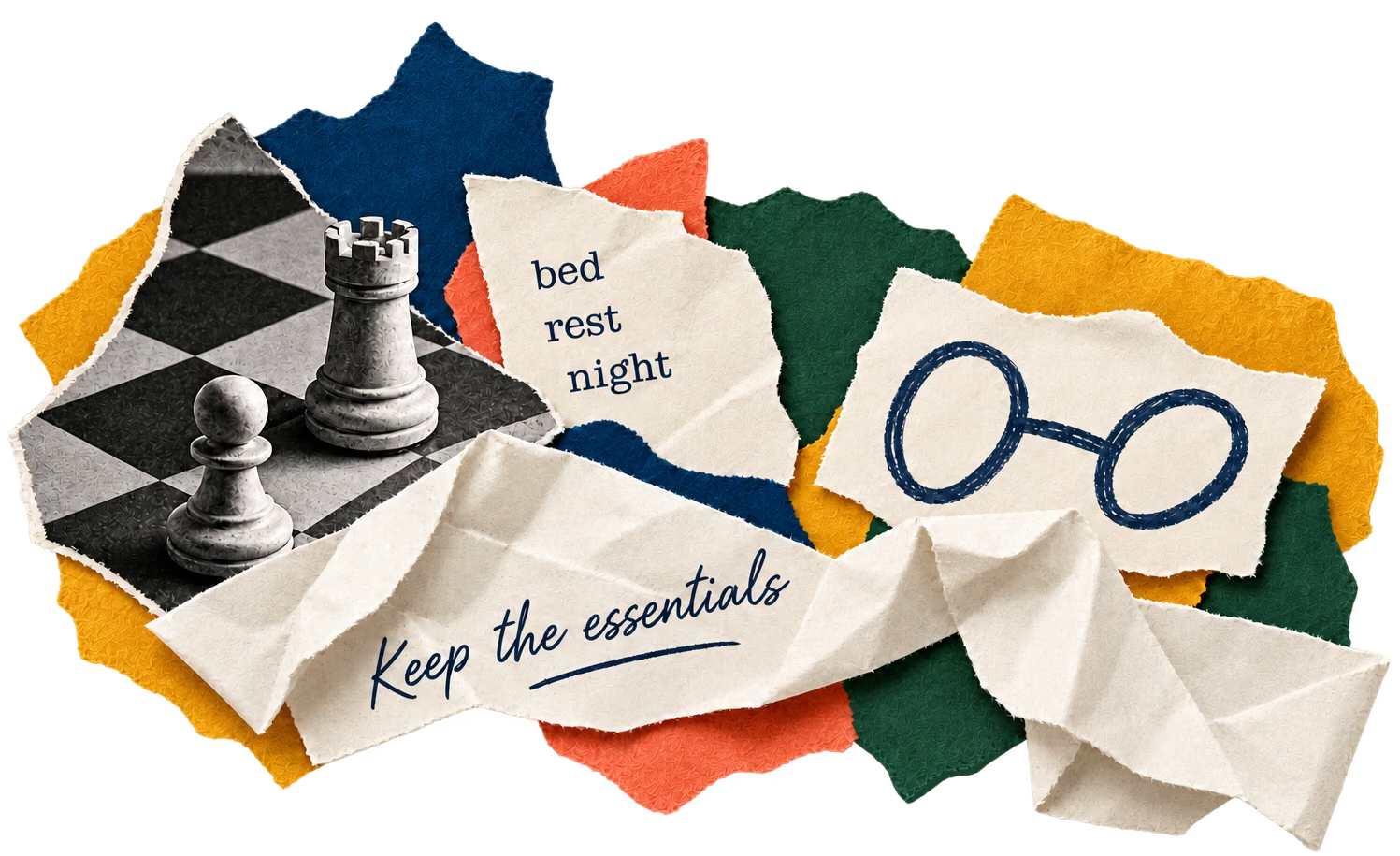
Using chess, text, and drawings, the models filled in missing details with what they had learned. This was a simulation, with no new participants.
The key idea
According to these models, remembering is reconstruction: what you already know fills gaps and sometimes distorts details.
The study, in plain language
Researchers tested an idea with generative models: store a summarized version of an experience based on known patterns and use those patterns to reconstruct it later. This saves space by preserving the overall structure while losing some details.
In chess, the model better reconstructed positions from real games the more it had trained on the game. For words, researchers trained the model on Wikipedia text and applied it to lists from earlier experiments; sometimes it reconstructed a related word that had never appeared. With ambiguous drawings, context tilted reconstruction toward one interpretation.
With more compression, literal recall declined and, during part of that process, more related words appeared that were not on the list. Under extreme compression, the overall meaning was also lost. The proposal brings these distortions together: remembering is reconstruction using what has been learned, and that help can also distort a memory.
What they found
- With more experience, the chess model reconstructed positions from real games better than positions with randomly placed pieces.
- When reconstructing word lists, the model sometimes added a related word that had never appeared.
- Context tilted how ambiguous drawings were reconstructed.
How they studied it
Researchers trained generative models on chess positions, Wikipedia text, and QuickDraw sketches. They varied experience, context, or how much the memory was compressed, and compared reconstructions with previously published patterns of human memory. They did not recruit new participants.
What the study cannot show
- A simulation that reproduces patterns from human studies does not establish that the brain uses the same algorithm. Parameters were chosen to reproduce qualitative trends, and the model does not explain every known effect of memory.
Something to think about
Think of a memory that seems vivid: how much comes from what you saw, and how much from what would make sense to happen? A memory that fits well is no guarantee that every part occurred.
The original study
Optimal forgetting: Semantic compression of episodic memories
Source under CC BY 4.0. English adaptation and explanation by PaperFlow, with AI assistance. The text has been reorganized for a general audience; it is not the complete paper and does not imply endorsement by its authors.
One study alone does not represent a field's consensus. Educational content does not replace professional advice. Report a possible error.