Fewer megabits, similar internet use, and more frustration
In rural British Columbia communities, people reporting less than 50 Mbps had fewer devices and watched less streaming content.
The key idea
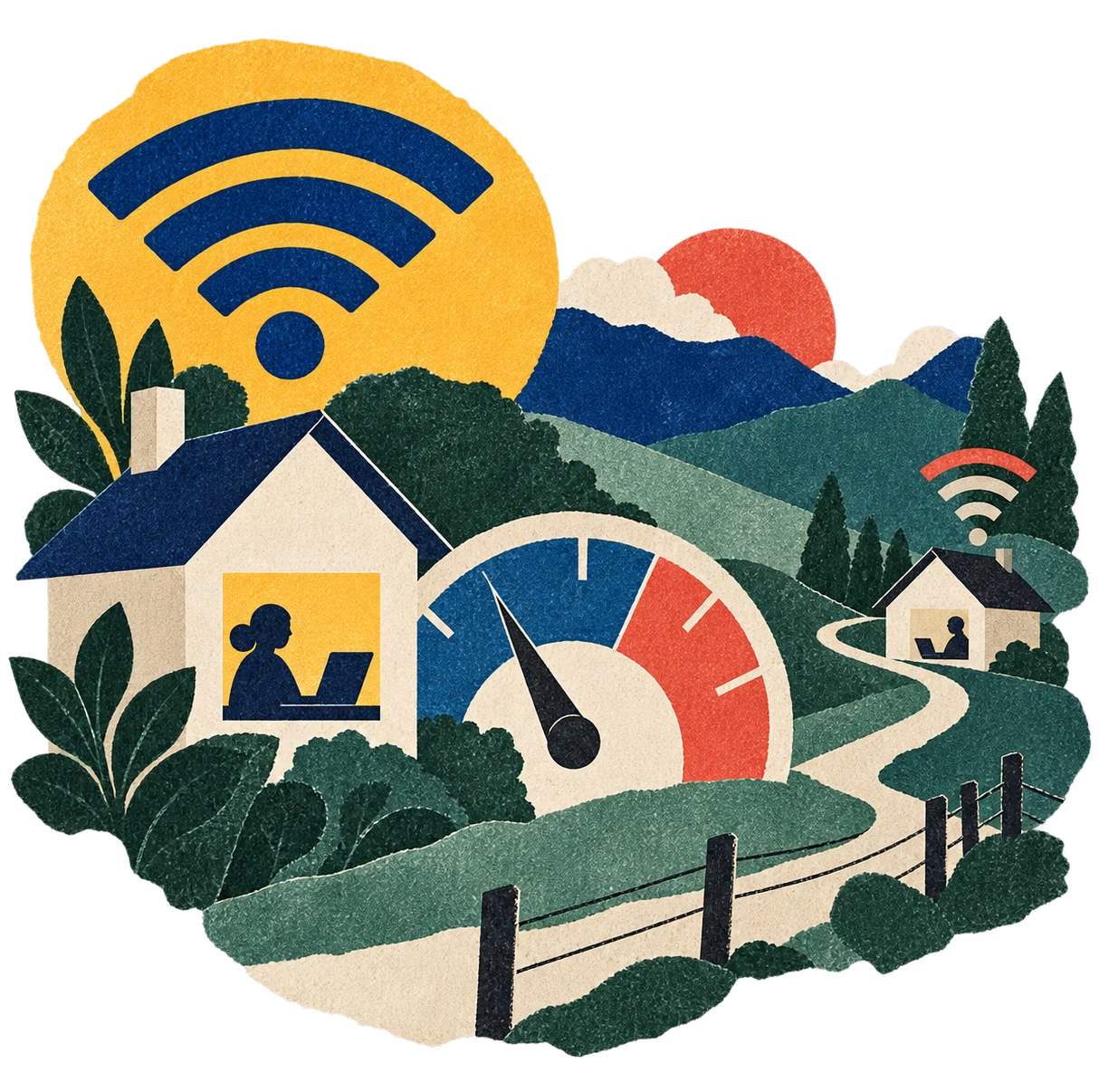
People reporting lower speeds had fewer devices and more frustration, although their skills and overall use were similar.
The study, in plain language
Download speed is an easy number to compare, but it does not by itself explain what a connection feels like. A survey of 461 rural British Columbia residents asked about activities, devices, skills, and everyday frustrations.
People reporting lower speeds tended to live in more remote areas, have fewer connected devices, and describe more limits on what they could do online. Digital readiness, skills, and confidence were similar between groups, as was overall frequency of use.
A difference in frequency appeared for online viewing, such as shows or videos streamed over the internet: people with slower service did this less often. Similar skills and frequent connection coexisted with different opportunities for some activities.
What they found
- Those reporting lower speeds tended to be older, live farther away, have fewer connected devices, and feel more frustration.
- Digital readiness, skills, and confidence were similar for slower and faster connections.
- Overall use was similar, although streaming was less common with slower service.
Something to think about
When thinking about rural connectivity, look beyond speed: the activities and devices a connection supports also matter.
How they studied it
A one-time self-report survey of 461 residents of rural British Columbia communities, conducted from October 2023 to April 2024. The team compared people reporting at least 50 Mbps with those below that level. Connection speed was not assigned, and causes were not tested.
What the study cannot show
- A one-time survey design cannot establish cause and effect. The authors could not estimate response or nonresponse bias. The sample was relatively homogeneous in gender and cultural identity and mostly included women with more education. Most completed the survey online, which may have excluded households with weaker connectivity. Grouping by download speed also fails to capture all aspects of service quality or stability.
- That increasing speed alone would cause the observed differences, that 50 Mbps is sufficient for every household, or that the sample represents all rural communities or countries with different infrastructure.
The original study
Looking beyond digital broadband speeds: Rural British Columbian’s experiences with internet connectivity as a basic necessity
Source under CC BY 4.0. English adaptation and explanation by PaperFlow, with AI assistance. The text has been reorganized for a general audience; it is not the complete paper and does not imply endorsement by its authors.
One study alone does not represent a field's consensus. Educational content does not replace professional advice. Report a possible error.