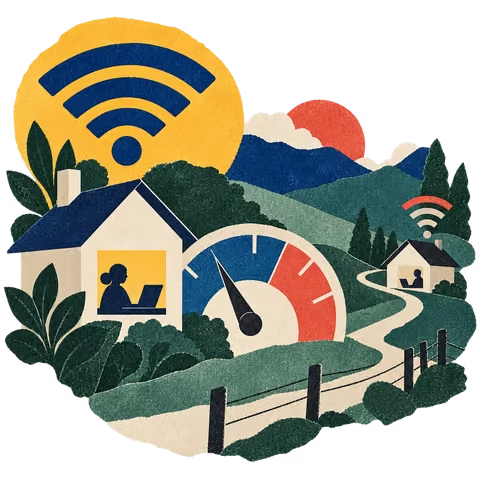
Broadband: more internet access and use, with no clear improvement in skills
In rural Chinese households, broadband coincided with greater access and use. With technical training, there was a favorable association with skills.
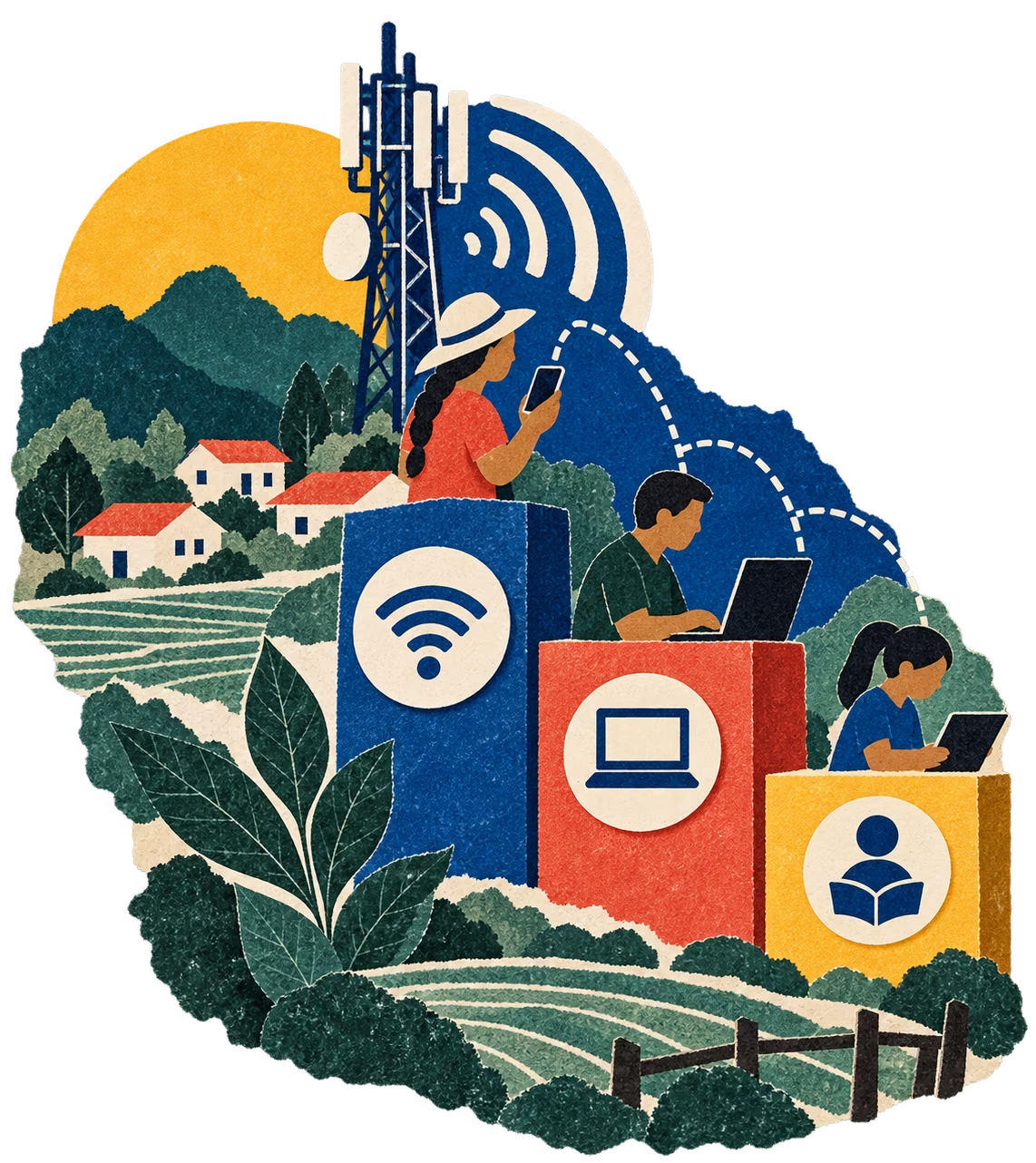
The key idea
Broadband coincided with more access and use. The favorable association with skills appeared where technical training was also available.
The study, in plain language
Having a connection available opens a door, but it does not by itself teach people to use what is on the other side. To explore this difference, the team analyzed surveys of rural Chinese households before and after a public broadband program expanded.
Areas included in the program showed gains in internet access and use. The measure of digital skills did not show a clear improvement over the same period. Where technical training was also available, a more favorable relationship with those skills appeared.
Patterns varied by age and occupation: among older people and agricultural workers, the link with access and use was less clear, while the skills association appeared more among students and people in non-agricultural jobs.
What they found
- Broadband expansion was associated with gains in internet access and use.
- The main analysis found no robust improvement in the skills measure. A favorable association did appear with technical training.
- Patterns varied by age and occupation, and skill associations appeared more among students and people in non-agricultural jobs.
Something to think about
Having internet and knowing how to use it are different things. Think of someone who recently got connected: what might they need besides a signal?
How they studied it
The team compared areas included and not included in a broadband program before and after its rollout, using surveys of 18,098 rural Chinese households from 2010 to 2018. They also analyzed the role of technical training. The rollout was not randomized, so observed differences do not prove that the program caused them.
What the study cannot show
- The study compared regions and years, but internet access was not randomly assigned. It used participation in a public program as an indicator of improved infrastructure, without measuring every household connection. The data cover rural China from 2010 to 2018; learning to use the internet may take longer.
- That any broadband connection alone closes the skills gap, that effects are the same outside China, or that the study measures each household’s connection quality in real time.
The original study
Mechanisms and heterogeneity in the construction of network infrastructure to help rural households bridge the “digital divide”
Source under CC BY 4.0. English adaptation and explanation by PaperFlow, with AI assistance. The text has been reorganized for a general audience; it is not the complete paper and does not imply endorsement by its authors.
One study alone does not represent a field's consensus. Educational content does not replace professional advice. Report a possible error.