With a breathing cushion, students reported less anxiety before an exam
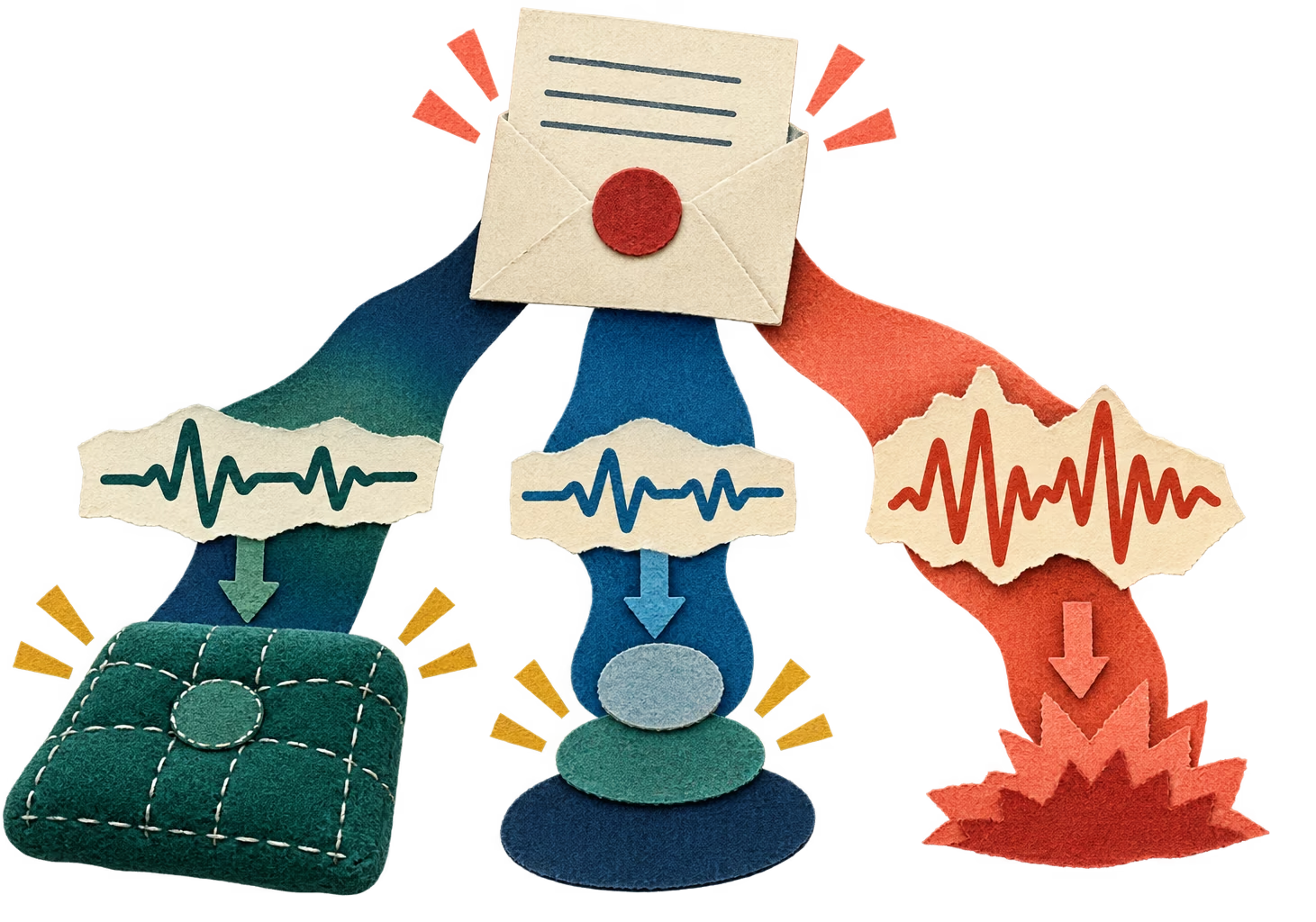
Of 129 students, those who used the cushion or listened to a meditation reported less anxiety before a simulated exam than the others.
The key idea
Before a simulated test, the cushion and guided meditation accompanied less anxiety than no support, with no apparent difference between them.
The study, in plain language
The object inflated and deflated as if it were breathing slowly. The team designed the cushion to explore a tactile way to accompany anxiety and tested it with students preparing for a simulated verbal mathematics exam.
Before the exam, those who used the cushion or listened to a guided meditation reported less anxiety than those who received nothing. There was no firm difference between the two supports. After the exam, the three groups did not differ, so the contrast appeared while waiting to take the test.
What they found
- The cushion mimicked slow breathing with a mechanism that inflated and deflated.
- Before the exam, anxiety was lower with the cushion or guided meditation than with no support, with no advantage between the two.
- After the exam, the groups no longer differed in anxiety.
Something to think about
If something makes you nervous, notice when it shows up most: while waiting or during the test? Here, the contrast appeared before the exam, not afterward.
How they studied it
The team developed prototypes and then tested the cushion in an experiment with 129 university students in Bristol, United Kingdom. Groups received the cushion, a guided meditation, or no support before a simulated exam, and anxiety was measured four times.
What the study cannot show
- Volunteer students took part in a laboratory setting.
- Differences appeared before the exam, not afterward.
- The cushion needs testing in real situations; it was not evaluated as a clinical treatment.
The original study
A calming hug: Design and validation of a tactile aid to ease anxiety
Source under CC BY 4.0. English adaptation and explanation by PaperFlow, with AI assistance. The text has been reorganized for a general audience; it is not the complete paper and does not imply endorsement by its authors.
One study alone does not represent a field's consensus. Educational content does not replace professional advice. Report a possible error.