Trillions of plastic pieces float at sea; large pieces account for most of the weight
By combining samples, shipboard observations, and a model, microplastics made up 92% of pieces while large pieces accounted for 75% of the mass.
The key idea
Counting pieces and weighing floating plastic give two different pictures: there are many tiny pieces, but large pieces account for the weight.
The study, in plain language
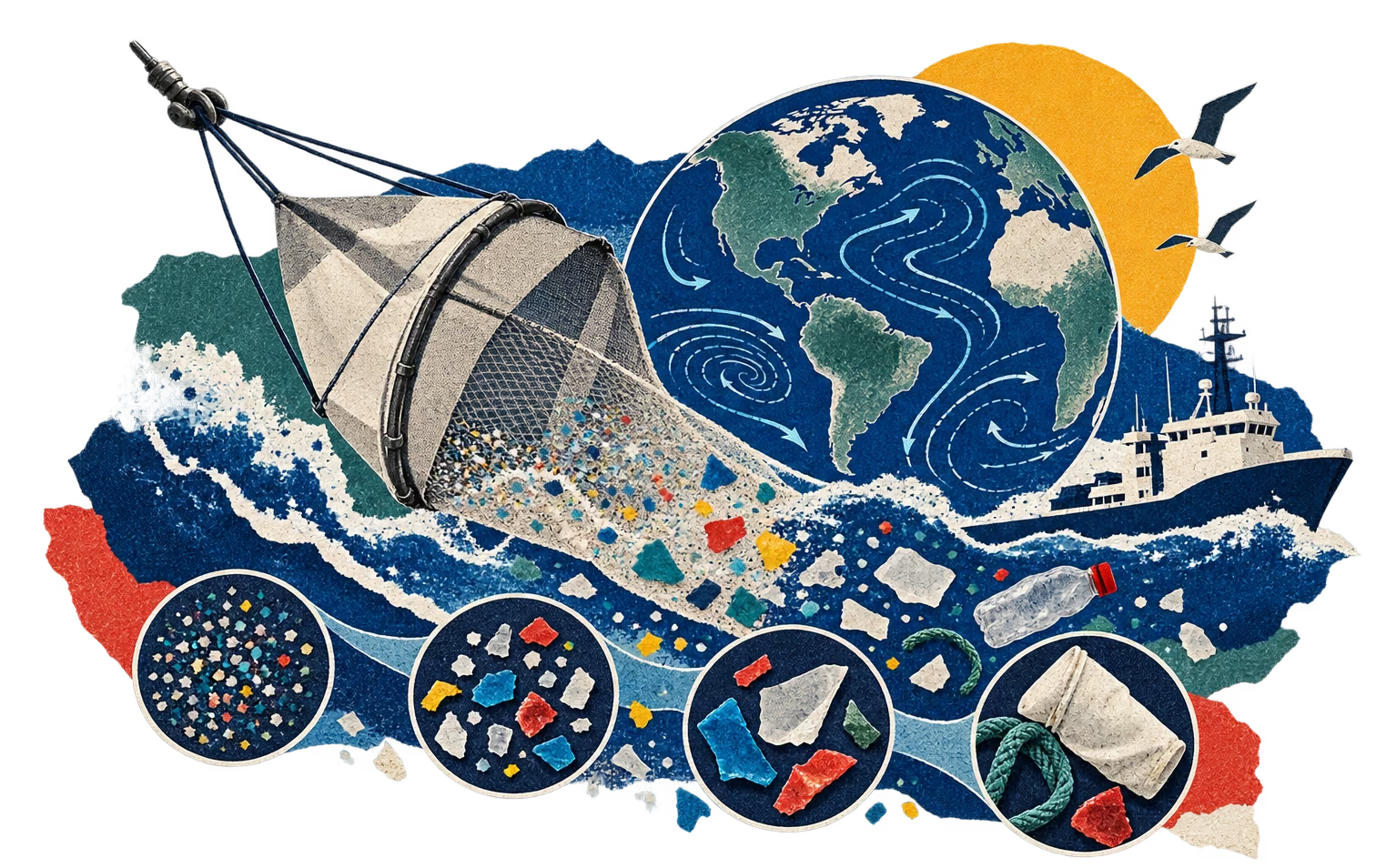
Counting plastic in the sea is not the same as weighing it. To include everything from tiny particles to large debris, a team combined net tows and shipboard observations with a model of transport between ocean regions.
The estimate included trillions of floating pieces. Most of the count consisted of microplastics, while large pieces accounted for most of the mass. Samples also showed plastic in the vast majority of expedition tows.
What they found
- Microplastics made up the vast majority of floating pieces.
- Large pieces accounted for most of the estimated weight.
- Nets collected plastic in the vast majority of tows.
Something to think about
When you see a figure for plastic in the sea, ask whether it counts pieces or weight: the two counts can tell very different stories.
How they studied it
The team combined 680 net tows and 891 visual-observation surveys conducted from 2007 to 2013 with an ocean-transport model, calibrated against observations and adjusted for how wind mixes water at depth.
What the study cannot show
- The data cover surveys from earlier years and leave geographic gaps.
- Nets do not capture the smallest particles, and observations may miss small or dark pieces.
- The model simplifies how plastic fragments, sinks, and degrades; it excludes beaches and the seafloor.
The original study
Plastic Pollution in the World's Oceans: More than 5 Trillion Plastic Pieces Weighing over 250,000 Tons Afloat at Sea
Source under CC0 1.0. English adaptation and explanation by PaperFlow, with AI assistance. The text has been reorganized for a general audience; it is not the complete paper and does not imply endorsement by its authors.
One study alone does not represent a field's consensus. Educational content does not replace professional advice. Report a possible error.