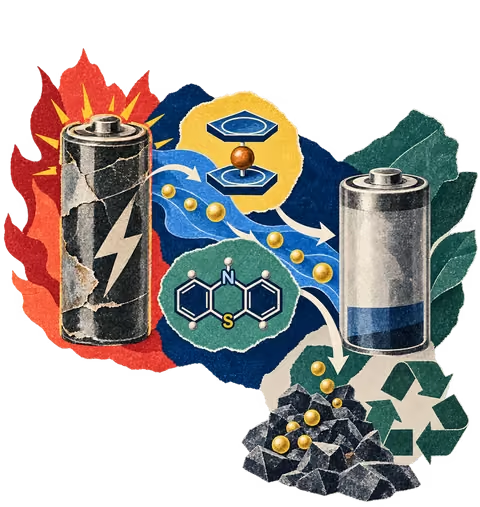
A brief electrical pulse recovered metals from used batteries
In the lab, 94% to 97% of measured metals were recovered from cathode waste. Water and energy savings came from a model.
The key idea
A brief heat pulse recovered battery materials without breaking their core structure, and a model estimated savings compared with other routes.
The study, in plain language
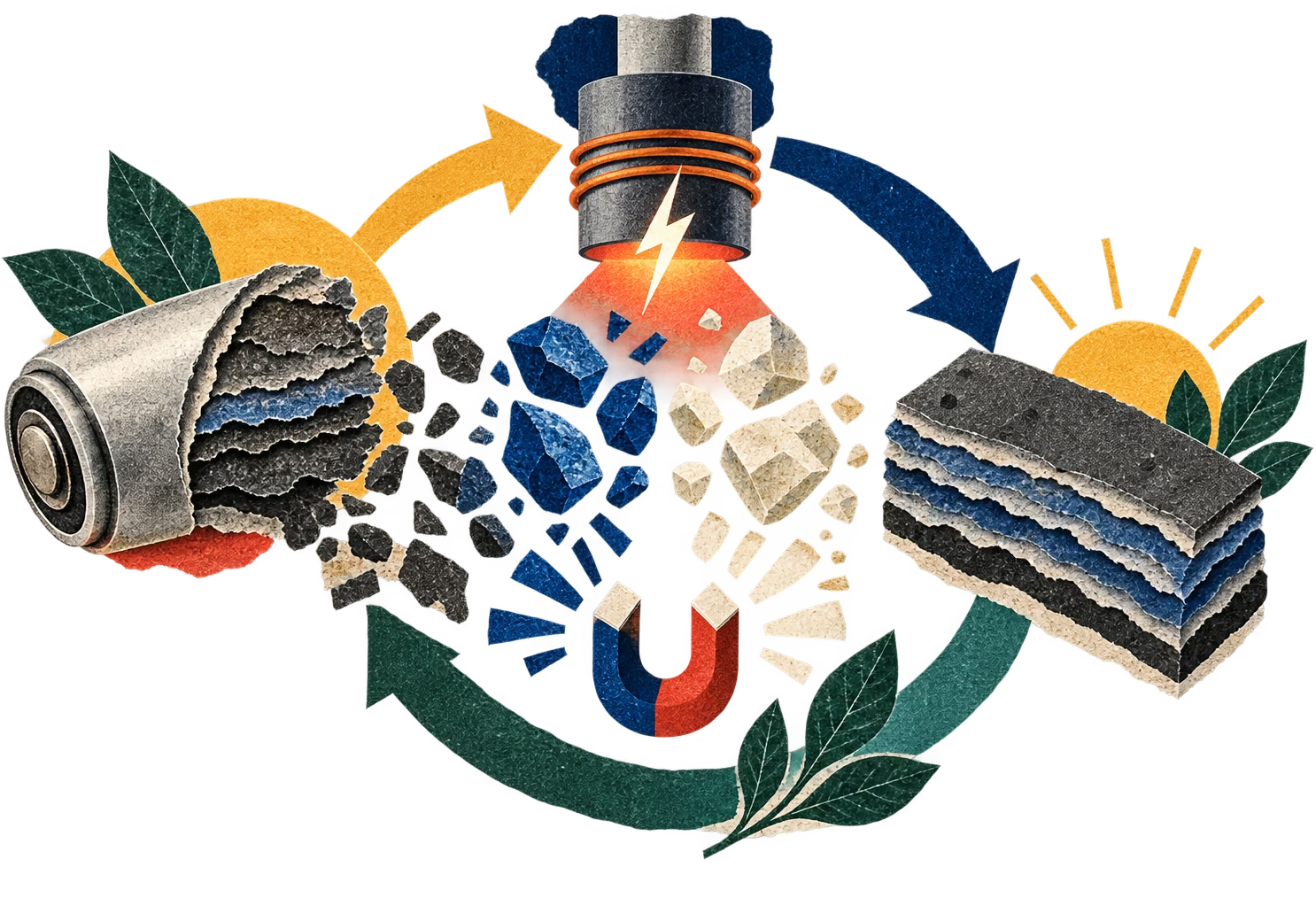
Some recycling routes break down a battery material’s structure and then require it to be rebuilt. The team tested another sequence with cathode waste: a very brief electrical pulse to heat the material, magnetic separation, and lithium replenishment.
The treatment recovered much of the measured metals and preserved the particles’ core structure. Materials replenished with lithium were then tested in batteries. A life-cycle analysis also estimated lower water and energy use, emissions, and costs than two recycling routes, under the model’s assumptions.
What they found
- Lithium, cobalt, nickel, and manganese were recovered from a cathode sample.
- Heating lasted a fraction of a second and was combined with magnetic separation.
- Water, energy, and emissions savings were estimated with a model, not measured at an industrial plant.
Something to think about
Batteries we stop using contain metals that can be recovered. How do the calculations change when we also measure how much water and energy recovery requires?
How they studied it
In the lab, the team heated used cathode materials with a brief electrical pulse and separated components with a magnet. They replenished lithium and tested the recovered material in batteries.
What the study cannot show
- The samples were small and represented few cathode types.
- Environmental results depend on the data, energy, and boundaries included in the model.
- The study does not demonstrate commercial operation or plant-scale safety.
The original study
Nondestructive flash cathode recycling
Source under CC BY 4.0. English adaptation and explanation by PaperFlow, with AI assistance. The text has been reorganized for a general audience; it is not the complete paper and does not imply endorsement by its authors.
One study alone does not represent a field's consensus. Educational content does not replace professional advice. Report a possible error.