Receiving financial support from their children went along with less work
They reported what they had done the previous day and what financial and caregiving support they gave to or received from their children. The team then looked for patterns.
The key idea
Giving and receiving support did not mark an older person’s day in the same way: the type and direction of support went along with different activities.
The study, in plain language
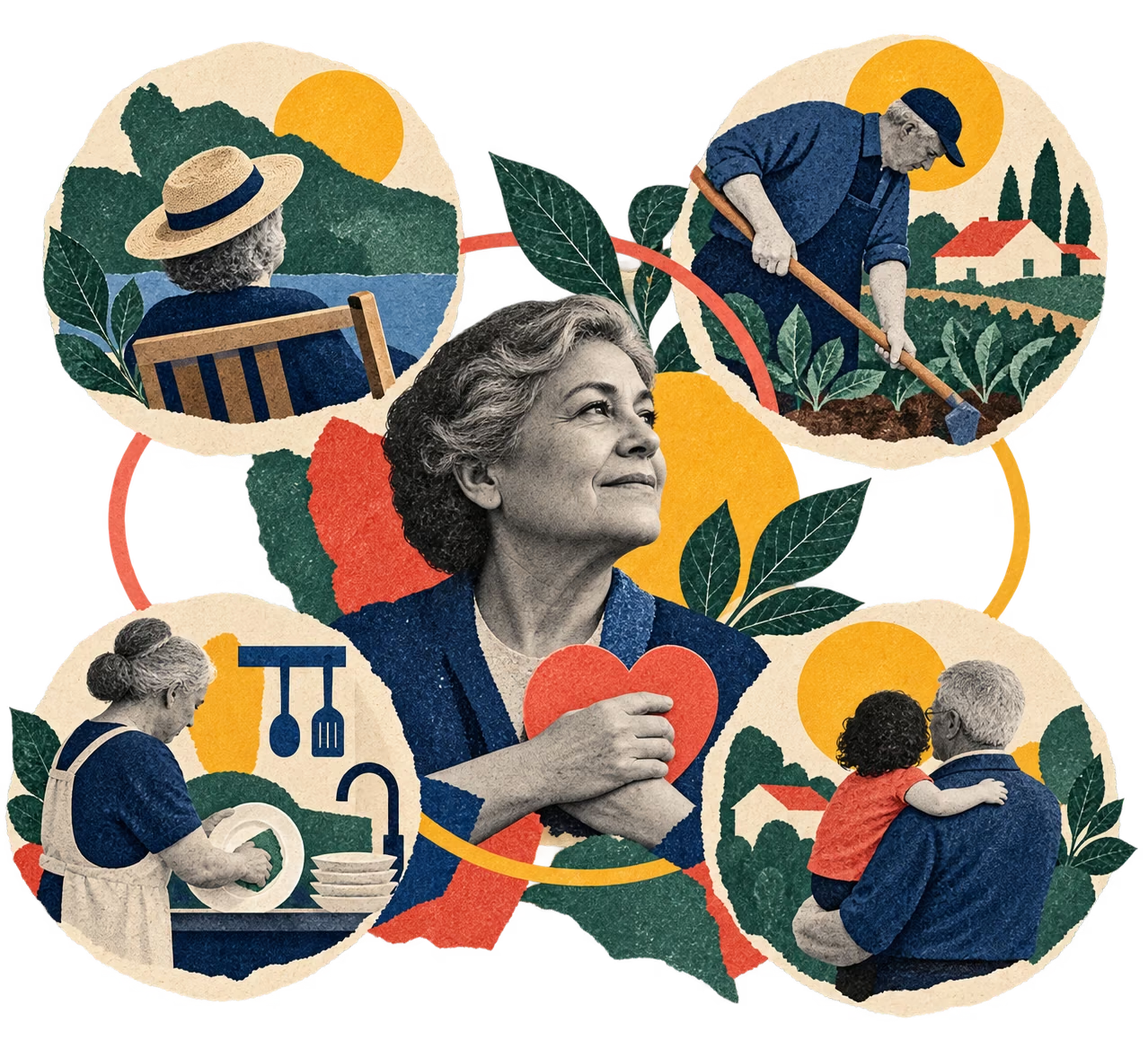
When people talk about support between generations, it is easy to think only about what children do for their parents. In rural areas of Chaohu, China, the team also asked about support older adults gave to their children and how they spent their day. The responses were grouped into four typical day patterns: housework, family work, work, and leisure.
Housework was the most common way to spend the day. Those who received financial support were less likely to fall into the work or family-work groups, while those who gave financial support were more likely to be in the family-work group.
Caregiving showed opposite patterns by direction: receiving care went along with a greater likelihood of leisure, while providing care went along with a lower likelihood. The type and direction of support had different relationships with daily activities. The study cannot tell whether support changed the day or the other way around.
What they found
- Housework was the most common way for older adults to spend the day.
- Receiving financial support from children went along with a lower likelihood of a work or family-work day.
- Receiving care went along with more leisure, while providing care went along with less.
How they studied it
The team analyzed 2018 and 2021 surveys of 2,591 people aged 60 or older in rural Chaohu, China, without intervening. They recorded the previous day’s activities and the financial and caregiving support respondents gave to or received from their children. This observational analysis cannot determine whether support changed activity or vice versa.
What the study cannot show
- The study cannot show whether support changes activities or activities influence the support received.
- The profiles simplify a range of different activities.
Something to think about
Think of a family you know: who helps whom, and how does that change each person’s day? This study looks at a rural area of China, not your own situation.
The original study
The impact of intergenerational support on social participation patterns of older adults in rural China
Source under CC BY 4.0. English adaptation and explanation by PaperFlow, with AI assistance. The text has been reorganized for a general audience; it is not the complete paper and does not imply endorsement by its authors.
One study alone does not represent a field's consensus. Educational content does not replace professional advice. Report a possible error.