Among refugees in Germany, each kind of support had its own network
Almost half of those providing practical help were new contacts. Emotional support came mainly from family.
The key idea
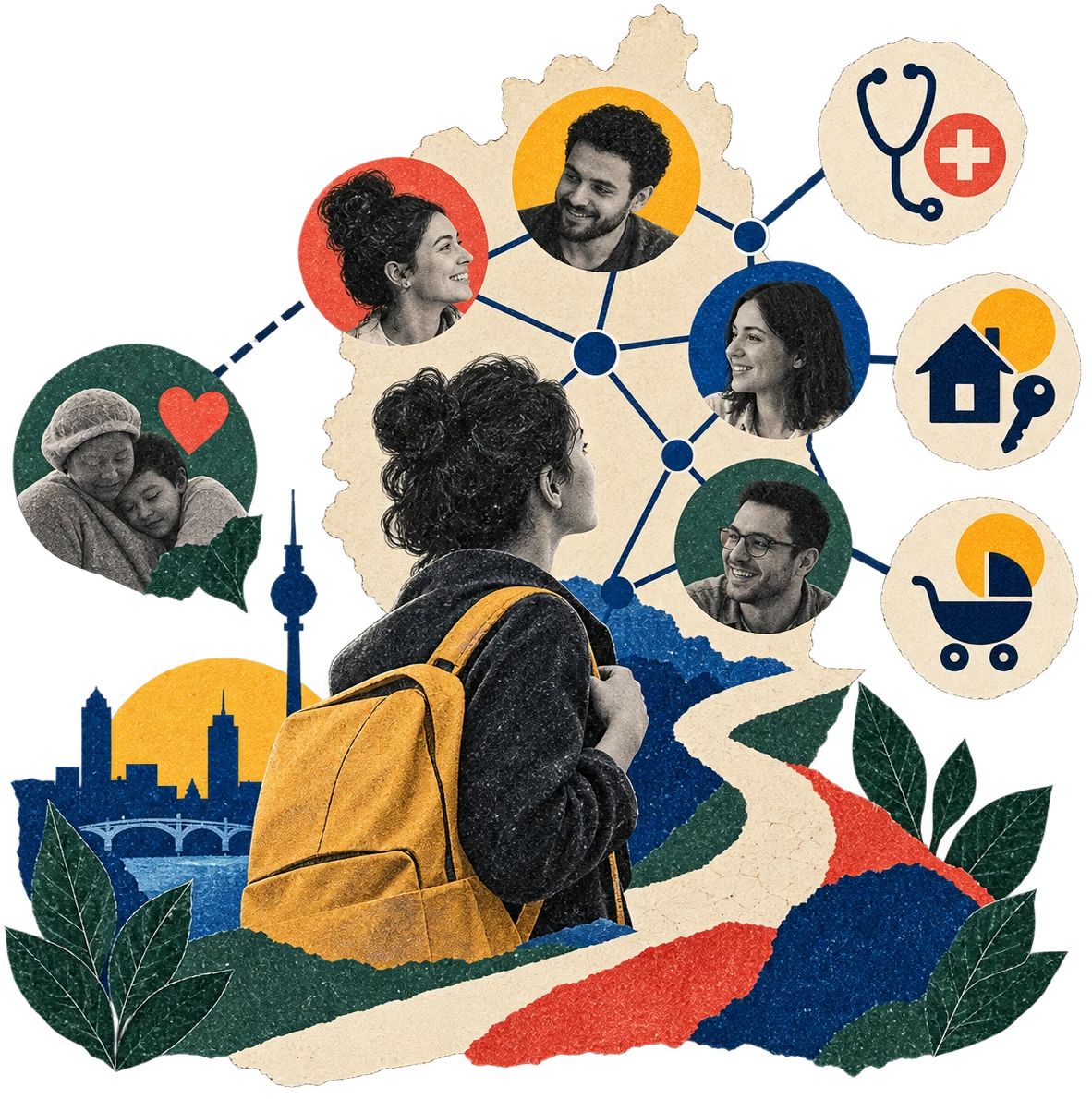
New ties played a large role in practical help. Family remained central to emotional support.
The study, in plain language
Arriving in another country also means finding people you can rely on. The team interviewed refugees from Syria and Eritrea in person in 2020. They had arrived in Germany between 2013 and 2019. Participants were asked who provided practical help, companionship, and emotional support, and when they had met those contacts.
Almost half of the contacts providing practical help had been formed after arrival in Germany. New ties were less common in companionship networks and even less common in emotional support networks, where family remained central.
People who were unmarried and had arrived without relatives were more likely to name new contacts in their companionship and emotional support networks than people who were married and arrived with family. Networks took different forms depending on what each person needed and who had accompanied them on arrival.
What they found
- Almost half of the contacts named for practical help were people participants had met in Germany.
- Companionship included both new and family contacts. Emotional support came mainly from family.
- Those who arrived without a partner or relatives tended to mention more new contacts.
How they studied it
An in-person survey conducted in 2020 with refugees from Syria and Eritrea who had arrived in Germany between 2013 and 2019. A total of 1,458 people responded. Network analyses compared the 920 who named at least one contact for each type of support. The researchers asked questions without intervening.
What the study cannot show
- Contacts were reported by participants and may not include all the help they received.
- These patterns do not describe all refugees equally.
Something to think about
Think about who would help you with a difficult task and whom you would tell about a worry: would it be the same person? For these refugees, the networks were different.
The original study
New country, new ties? Eritrean and Syrian refugees’ personal social networks after arrival in Germany
Source under CC BY 4.0. English adaptation and explanation by PaperFlow, with AI assistance. The text has been reorganized for a general audience; it is not the complete paper and does not imply endorsement by its authors.
One study alone does not represent a field's consensus. Educational content does not replace professional advice. Report a possible error.