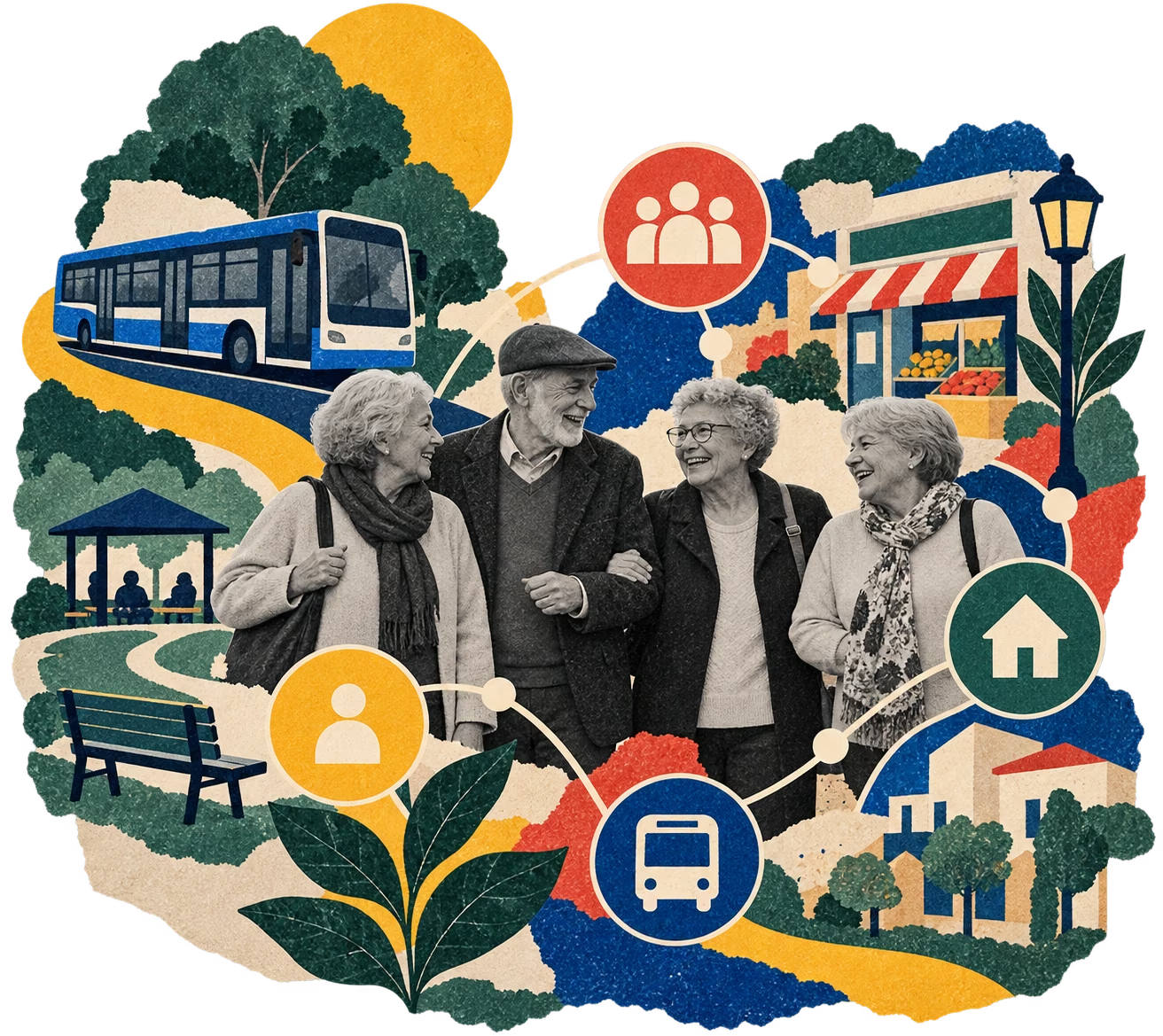
Older adults said a lack of transport could mean missing social gatherings
Shops, streets, and meaningful roles created opportunities to meet, according to accounts from 15 Australians aged 60 or older.
The key idea
For these older adults, connecting with others depended on relationships and on the places and services that made meeting possible.
The study, in plain language
Seeing familiar people depends on more than just wanting to. The team brought together people aged 60 or older from four towns in New South Wales and asked them to talk about what made it easier or harder to connect with others.
They described personal factors, close relationships, community spaces, and broader policies. A meaningful role, shops and streets where people could stop, or available transport could create opportunities to meet. A lack of transport or declining local resources could close them off.
In these accounts, social connection took shape through everyday choices and an environment that either enabled people to meet or made it difficult.
What they found
- The accounts combined personal circumstances, close ties, community life, and the broader social environment.
- A meaningful role and accessible places could create opportunities to meet.
- Shops, streets, and transport helped sustain everyday encounters.
How they studied it
A qualitative study based on accounts from four discussion groups with 15 people aged 60 or older in metropolitan and regional towns in New South Wales, Australia. The team analyzed what participants said without intervening. Because the study was qualitative, it describes these experiences and does not estimate how many older adults share them.
What the study cannot show
- Accounts help us understand experiences, but they do not measure the effect of a policy.
- The findings depend on the participants and settings included.
The original study
Cross-level environmental influences on social connection among older Australians: a social-ecological analysis
Source under CC BY 4.0. English adaptation and explanation by PaperFlow, with AI assistance. The text has been reorganized for a general audience; it is not the complete paper and does not imply endorsement by its authors.
One study alone does not represent a field's consensus. Educational content does not replace professional advice. Report a possible error.