Lower-income people had fewer high-income friends than expected
On Facebook, about half of that gap was associated with less exposure to one another. The other half was associated with fewer friendships forming when they did meet.
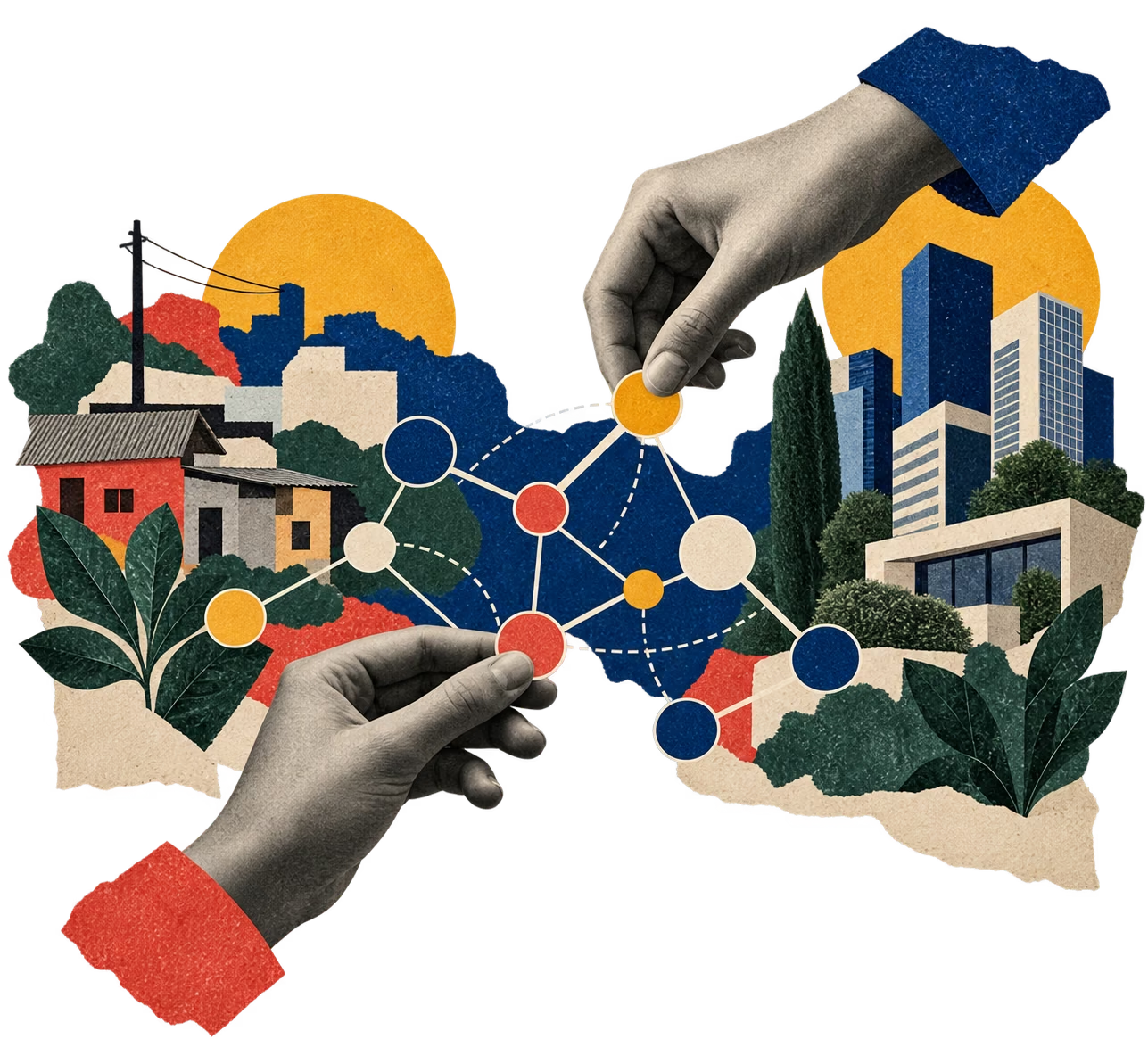
The key idea
Friendship across income groups requires both crossing paths and forming a connection when people meet.
The study, in plain language
For two people to become friends, they first have to cross paths. The team analyzed protected Facebook data and separated these two stages: how often someone shares a setting with people of other incomes, and how often a connection forms once they are there. They examined six types of settings.
Lower-income people had fewer higher-income friends than expected based on their presence in the network. About half of the gap was associated with opportunities to meet, and the other half with friendship formation. Setting also mattered: across income groups, connections were more likely in religious groups than in neighborhoods, once opportunities to meet were equalized. These are observational data: they show what went together, not why.
What they found
- Lower-income users had fewer high-income friends than expected based on each group's presence.
- About half of the gap was associated with opportunities to cross paths. The other half was associated with connections forming.
- Given the same opportunities to meet, friendship across income groups was more likely in religious groups than in neighborhoods.
How they studied it
The researchers observationally analyzed protected data from more than 70 million active U.S. Facebook users aged 25 to 44. They compared recorded friendships across six types of settings and separated how often people from different groups crossed paths from how often they formed connections.
What the study cannot show
- Activity on one platform does not include every relationship or represent everyone equally.
- The observed patterns do not establish what causes a friendship.
Something to think about
Think about the places where you meet new people: do they bring you into contact with people of other incomes, and do those encounters turn into friendships? This study looks at averages across millions of users, not your individual case.
The original study
Social capital II: determinants of economic connectedness
Source under CC BY 4.0. English adaptation and explanation by PaperFlow, with AI assistance. The text has been reorganized for a general audience; it is not the complete paper and does not imply endorsement by its authors.
One study alone does not represent a field's consensus. Educational content does not replace professional advice. Report a possible error.