In a disaster, neighbors combined memory, relationships, and technical knowledge
Close ties provided practical and emotional help, while outside contacts expanded available resources, according to three Colombian communities.
The key idea
Preparedness relied on each community’s memory and relationships, while existing alongside a lack of infrastructure and uneven management.
The study, in plain language
The team held interviews and group discussions with residents and officials in three Colombian communities exposed to water- and climate-related risks. They wanted to understand where people’s knowledge about disasters came from and how support was organized, long before formal aid arrived.
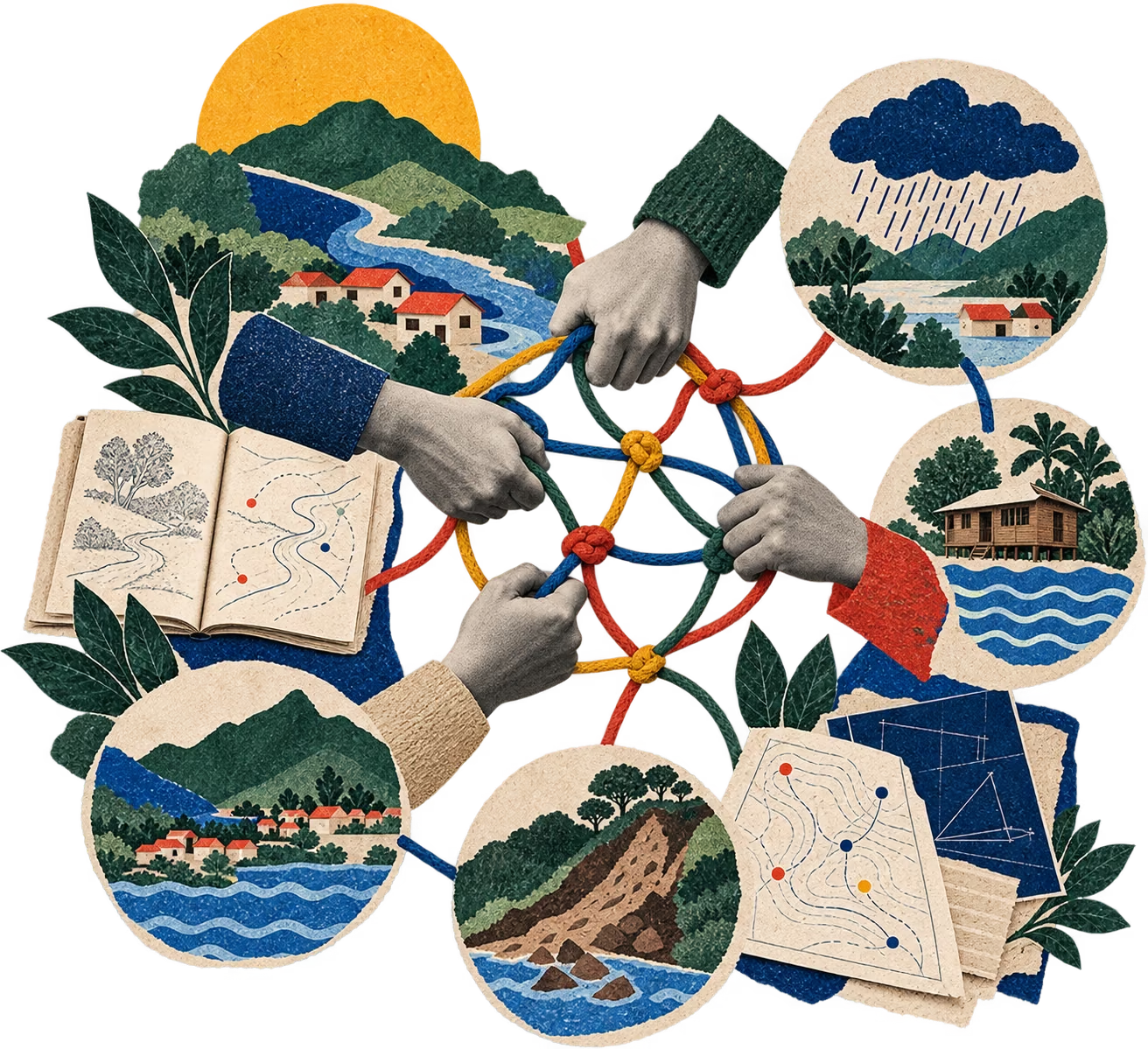
People’s knowledge came from several sources: memories of past events, close observation of the area, what neighbors learned from one another, and technical knowledge. Close ties brought practical and emotional help, while outside contacts, including people or institutions, could expand resources.
Cooperation played an important role, but it coexisted with inadequate infrastructure, coordination problems, and unequal public services. The preparedness participants described brought together local memory, support networks, and institutional capacity. This is a study of accounts from three communities: it describes people’s experiences but does not measure how much each factor helps.
What they found
- Memories of past events, observation of the area, and learning from neighbors helped people identify risks.
- Close ties provided support within the community. Contacts from outside broadened opportunities for help.
- Cooperation among neighbors coexisted with inadequate infrastructure and uneven public management.
How they studied it
A study comparing accounts from Salgar, Mocoa, and La Primavera, three Colombian communities exposed to water- and climate-related risks. Researchers collected 96 interviews, held ten group discussions, and conducted observation within the communities.
What the study cannot show
- The findings do not represent every disaster or region.
- The comparison describes experiences; it does not estimate a general causal effect.
Something to think about
Think about your neighborhood in an emergency: who remembers what happened last time, and whom would you call first? This study describes three cases, not a universal rule.
The original study
Social capital and community resilience in disaster contexts: a multiple case study from Colombia
Source under CC BY 4.0. English adaptation and explanation by PaperFlow, with AI assistance. The text has been reorganized for a general audience; it is not the complete paper and does not imply endorsement by its authors.
One study alone does not represent a field's consensus. Educational content does not replace professional advice. Report a possible error.