A gap in work history reduced selections by about 20%
Fictional hospitality résumés with a pandemic-era gap also received lower ratings for commitment and readiness.
The key idea
Holding everything else equal, a work-history gap was enough to lower selections and ratings, but only for fictional profiles.
The study, in plain language
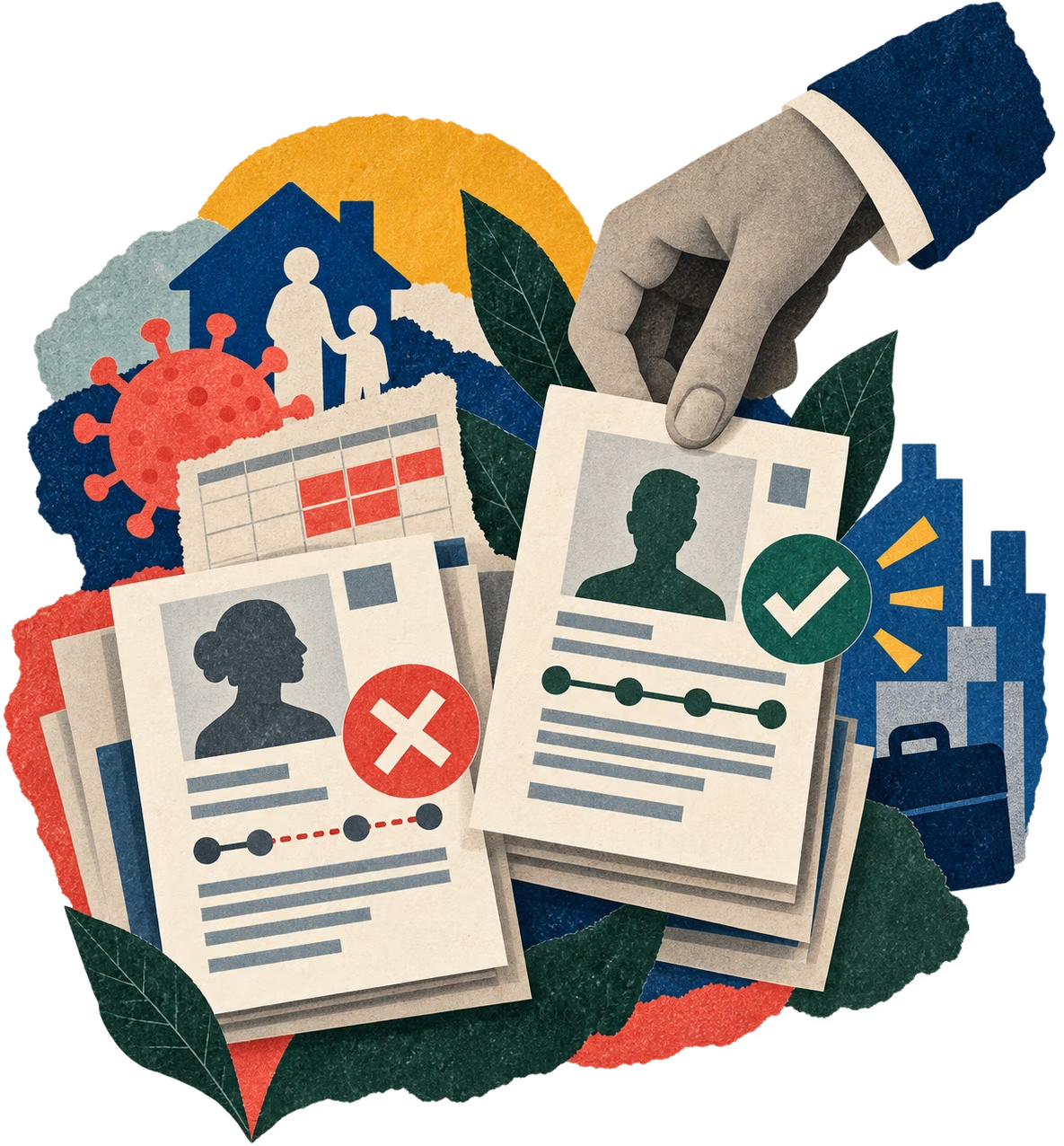
The experiment showed fictional profiles for hospitality jobs. Some had continuous employment. Others had a gap during the pandemic linked to layoffs, caregiving responsibilities, or intermittent work. Work histories were randomly assigned while the rest of each profile stayed the same.
Participants selected profiles with gaps less often and rated them lower for commitment, effort, professionalism, and readiness. Those who said they had hiring experience showed the same pattern. The study measured responses to fictional profiles, not real hiring.
What they found
- A work-history gap led to fewer selections than continuous employment.
- Profiles with gaps also received lower ratings for commitment, professionalism, and readiness.
- Even participants who said they had hired people before showed this pattern.
How they studied it
In an online survey, 974 U.S. adults evaluated fictional job-applicant profiles. Work histories were randomly assigned, while other profile characteristics were held constant.
What the study cannot show
- The survey did not observe real hiring decisions, and the sample was not a simple random sample.
- It cannot predict what a real employer will do with a specific person.
Something to think about
When you read a résumé with a gap, notice what you assume and what the profile actually says.
The original study
Perceptions of pandemic resume gaps: Survey experimental evidence from the United States
Source under CC BY 4.0. English adaptation and explanation by PaperFlow, with AI assistance. The text has been reorganized for a general audience; it is not the complete paper and does not imply endorsement by its authors.
One study alone does not represent a field's consensus. Educational content does not replace professional advice. Report a possible error.