Without saying a word, their steps already showed whether they hit it off
Among women meeting for the first time, a better first impression went with more synchronized walking. The same pattern did not appear among men.
The key idea
Among women, a better first impression went along with more synchronized steps in silence. That did not predict a larger improvement after the same stretch.
The study, in plain language
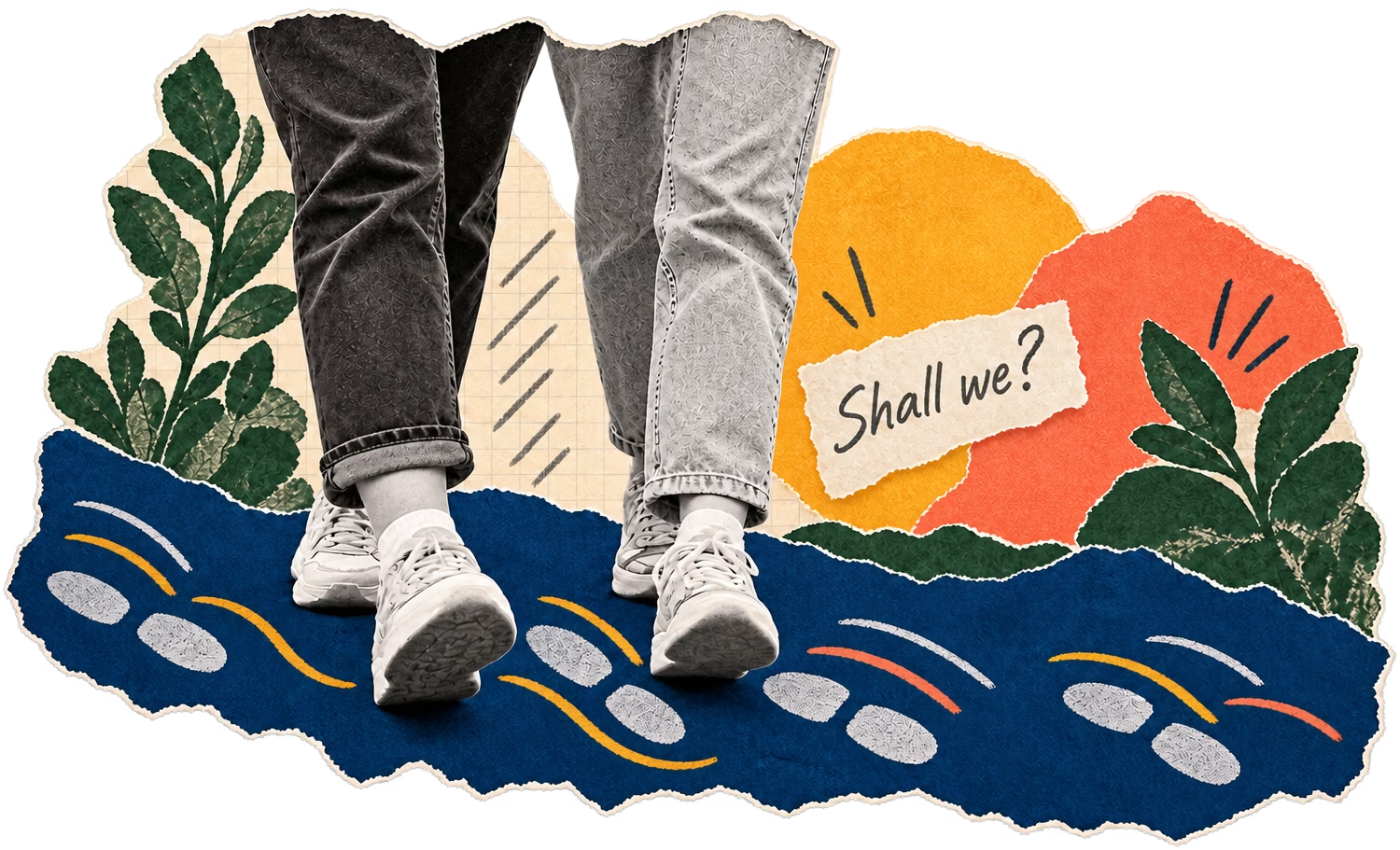
The test was simple. Sixty-seven young people walked about 350 meters with different people of the same gender: first in silence, then while talking. Ankle sensors recorded every step, and before and after the walk each person reported the impression the other had made.
The steps coordinated more than chance would predict, both with and without conversation. The notable finding came during the silent stretch: the better the first impression, the more synchronized their steps. When the team separated the results by gender, this pattern appeared in pairs of women, not pairs of men.
The team also tested whether greater synchrony went along with a bigger improvement in the impression after the silent stretch. They found no such relationship. On average, impressions improved after walking in silence and improved again after talking, but that does not show that synchrony caused the change.
What they found
- A better first impression went along with more synchronized steps during the silent stretch.
- This pattern appeared in pairs of women, not pairs of men.
- Greater synchrony was not associated with a bigger improvement in the impression after the silent stretch.
How they studied it
Sixty-seven young people walked about 350 meters in silence and then while talking with different people of the same gender. Ankle sensors measured their steps, and questionnaires before and after measured the impression each person had of the other.
What the study cannot show
- All pairs walked in silence first and then talked, and each participant walked with several people.
- The experiment studied young people in same-gender pairs on one specific route. Its sequence does not show that matching steps improves the impression people have of each other.
Something to think about
If you walk with someone you have just met, notice whether you fall into the same pace. It is an interesting signal, not a trick: here, greater synchrony did not go along with a better impression after the silent stretch.
The original study
Paired walkers with better first impression synchronize better
Source under CC BY 4.0. English adaptation and explanation by PaperFlow, with AI assistance. The text has been reorganized for a general audience; it is not the complete paper and does not imply endorsement by its authors.
One study alone does not represent a field's consensus. Educational content does not replace professional advice. Report a possible error.