One-third of reported moments included both pleasant and difficult emotions
More than 11,000 people used a French-language app to report how they felt at random times. Joy, love, and anxiety were among the most frequent emotions.

The key idea
In this group’s everyday emotional life, feeling good and bad at the same time was common.
The study, in plain language
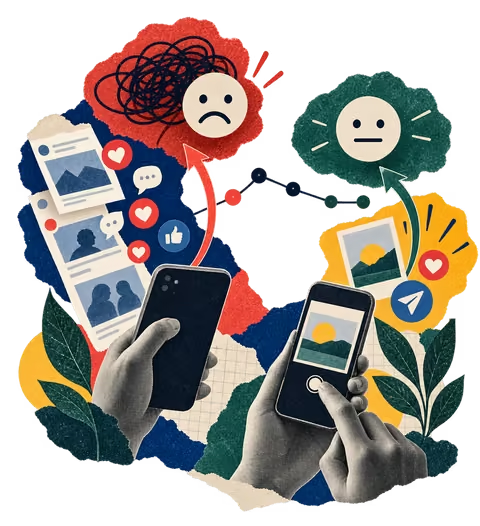
The phone sent a prompt at a random time, and each person could choose from 18 emotions to report how they felt. In nearly 90% of moments, people selected at least one emotion; joy, love, and anxiety were among the most frequent.
When the responses were separated, some moments included only pleasant emotions, others only difficult ones, and many included a mix. The team also built a network to see which emotions tended to appear together, which connected to several others, and which tended to feel more isolated.
The map shows an emotional life with more nuance than a single label. Pleasant and difficult feelings could coexist in the same moment, and this mix appeared repeatedly in the records. Still, participants volunteered and could skip prompts, so the study describes how this group felt; it does not explain why.
What they found
- Pleasant and difficult emotions co-occurred in one-third of the moments.
- Joy, love, and anxiety were among the most frequent emotions.
- The responses showed which emotions tended to appear together.
How they studied it
A French-language app prompted volunteers at random times, within the hours each person selected. The researchers analyzed 65,721 responses from 11,572 people, who marked which of 18 emotions they felt. Groups were not assigned at random: the researchers asked questions without intervening. Participants volunteered and were mostly women living in France, so the sample does not represent the whole population.
What the study cannot show
- The sample was voluntary and mostly French and female. People could skip prompts, working hours were overrepresented, and the records noted whether an emotion was present, not its intensity. The network describes associations, not causes.
Something to think about
If you feel excited and worried at the same time today, perhaps you do not have to decide which feeling is the real one: in this study, the two often coexisted in everyday life.
The original study
Emotions in Everyday Life
Source under CC BY 4.0. English adaptation and explanation by PaperFlow, with AI assistance. The text has been reorganized for a general audience; it is not the complete paper and does not imply endorsement by its authors.
One study alone does not represent a field's consensus. Educational content does not replace professional advice. Report a possible error.