An integrated program begun during radiotherapy reduced visceral fat
Among 95 women with breast cancer, the program group also improved more on a physical-capacity test at three months.
The key idea
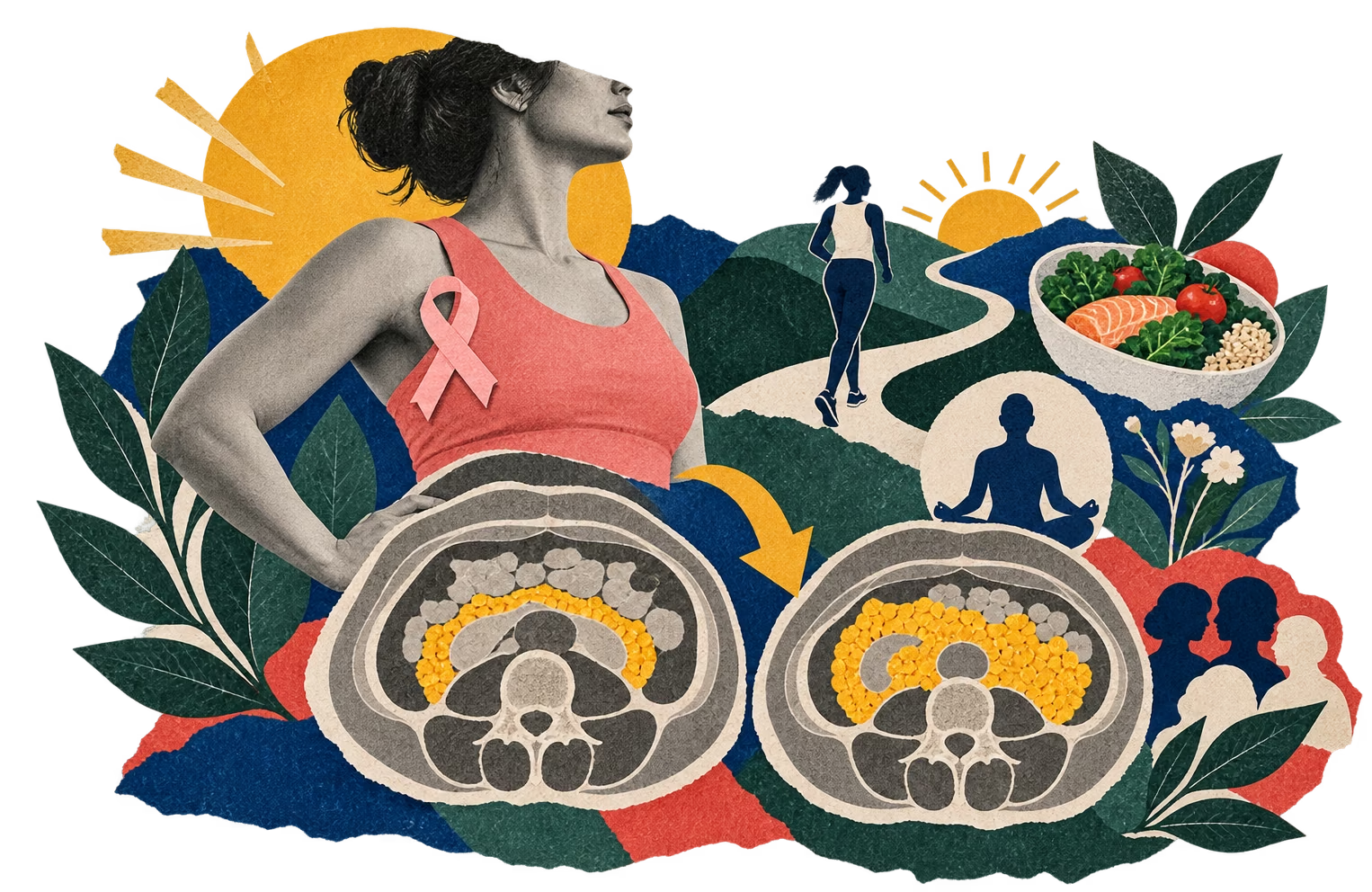
Compared with standard care, the integrated program showed improvements in visceral fat, physical capacity, symptoms, and fiber intake among participants who provided data.
The study, in plain language
Called CompLife, the program began during the four to six weeks of radiotherapy and continued with remote support. At one U.S. center, the trial combined nutrition, exercise, mindfulness, and psychosocial support for women with stage II or III breast cancer and compared it with standard care.
At three months, the program group had less fat around the organs and better results on a physical-capacity test. At one year, symptom measures and fiber intake also favored the program. However, far fewer participants provided follow-up data than were assigned, especially in standard care. These were secondary outcomes, planned in advance but not the primary objective.
What they found
- The program combined nutrition, exercise, mindfulness, and psychosocial support during radiotherapy and then remotely.
- At three months, the program group had less fat around the organs and better physical capacity than the standard-care group.
- At one year, symptoms and fiber intake favored the program among participants with follow-up data.
Something to think about
When a program combines several elements, such as nutrition, exercise, and emotional support, how much does each contribute? This study measured the package as a whole, and not all participants stayed through the end.
How they studied it
The trial randomly assigned 95 women with stage II or III breast cancer receiving radiotherapy at one U.S. center, whose weight exceeded a study-defined threshold and who had at least two lifestyle risk factors. The program began during the four to six weeks of radiotherapy and continued remotely through 12 months. This report presents secondary outcomes, with analyses announced before the study began, covering body composition, physical capacity, and participant-reported measures.
What the study cannot show
- The study took place at one center, and 78% of participants were white. Many stopped participating: at one year, data were available for 32 of the 50 women in the program group and 13 of the 45 in the comparison group. Several additional outcomes were examined.
- We still do not know whether the program reduces the chance of cancer returning or the risk of death. We also cannot tell which part of the program produced the observed differences.
The original study
Lifestyle Program for Breast Cancer Improves Body Composition, Fitness, and Patient-Reported Outcomes: A Randomized Clinical Trial
Source under CC BY 4.0. English adaptation and explanation by PaperFlow, with AI assistance. The text has been reorganized for a general audience; it is not the complete paper and does not imply endorsement by its authors.
One study alone does not represent a field's consensus. Educational content does not replace professional advice. Report a possible error.