Adding exercise or counseling showed no change in pregnancy weight gain
Gestational diabetes also showed no difference. 219 healthy, inactive pregnant women in Denmark were randomized to three groups.
The key idea
In this trial, adding exercise or counseling did not change weight gain, and participants moved less than expected.
The study, in plain language
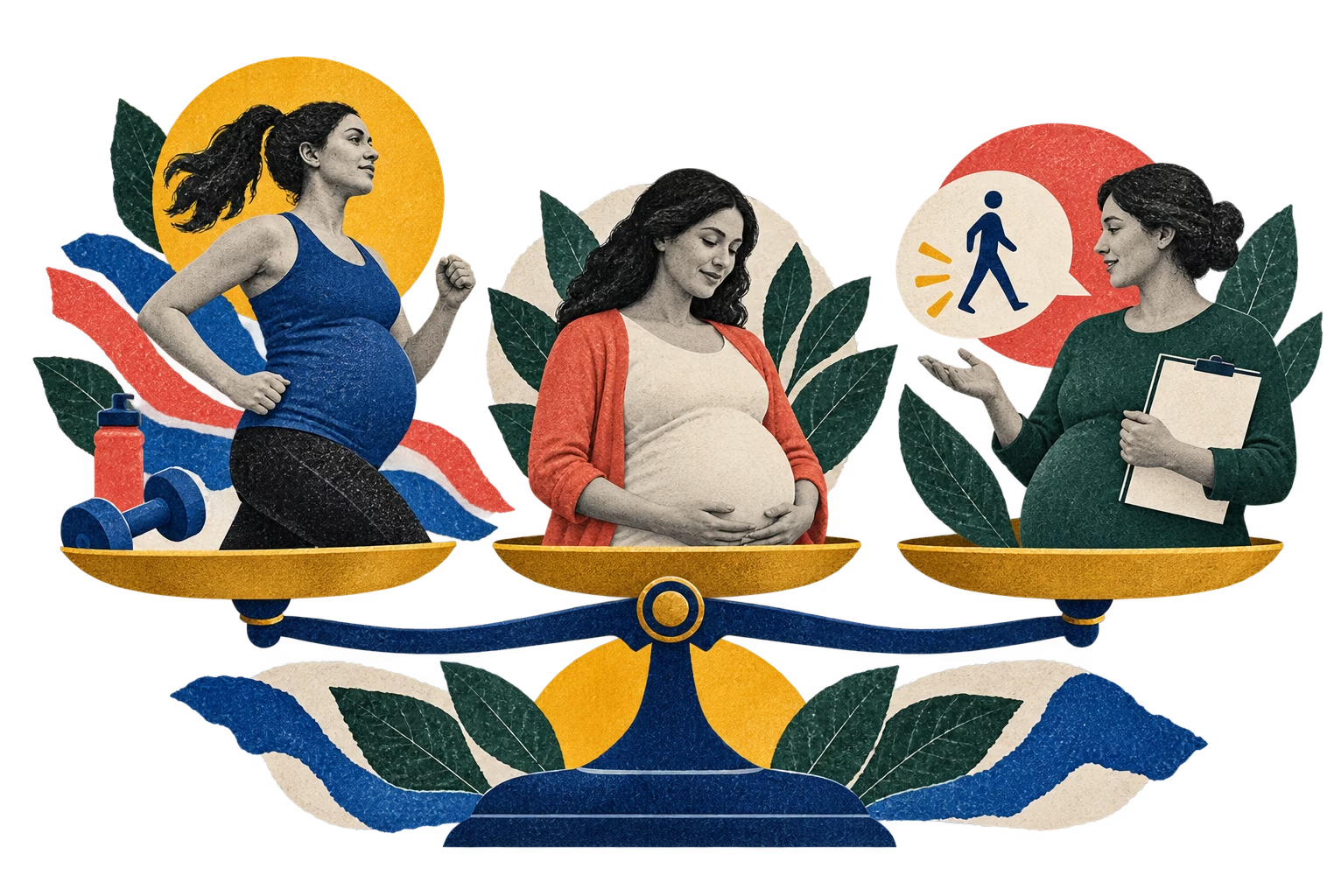
The study proposed two ways to add movement during pregnancy: supervised exercise sessions or motivational counseling meetings. A trial in Denmark compared both with usual care in healthy pregnant women who were not very active at baseline. 219 were randomized, and delivery and infant data were available for 178.
There was no difference among groups in weight gain or gestational-diabetes frequency, and most delivery and infant outcomes followed the same pattern. In one specific comparison, delivery occurred somewhat later in the exercise group than in the counseling group, without a general benefit on other outcomes. Attendance and physical activity were also lower than expected, limiting conclusions.
What they found
- One group did supervised exercise, while another attended counseling sessions about physical activity.
- Weight gain and gestational-diabetes frequency were similar among groups.
- Most pregnancy and infant outcomes showed no differences. Attendance and activity were lower than expected.
Something to think about
When an activity program is tested, how much did people actually move? Here, attendance and physical activity were lower than expected.
How they studied it
Researchers randomized 219 healthy, inactive pregnant women in Denmark to three groups: supervised exercise three times a week, seven motivational-counseling sessions, or usual care. Weight gain was estimated using data from all 219. Delivery and infant data were available for 178 participants.
What the study cannot show
- Adherence to sessions was low, and moderate-to-vigorous activity levels were low in both intervention groups; tracker use may have had a Hawthorne effect. The population had a lower prevalence of overweight or obesity than some other settings. Diet was not controlled, and prepregnancy weight was self-reported.
- This does not show that exercise during pregnancy has no benefits. Many participants did not follow the full program, and the study may have been too small to detect some differences. The results may not apply to high-risk pregnancies.
The original study
Effects of prenatal exercise on gestational weight gain, obstetric and neonatal outcomes: FitMum randomized controlled trial
Source under CC BY 4.0. English adaptation and explanation by PaperFlow, with AI assistance. The text has been reorganized for a general audience; it is not the complete paper and does not imply endorsement by its authors.
One study alone does not represent a field's consensus. Educational content does not replace professional advice. Report a possible error.