A month of kombucha changed the mix of microbes, but not most health measures
After four weeks, groups differed in some gut species, but most metabolic and inflammatory measures were similar.
The key idea
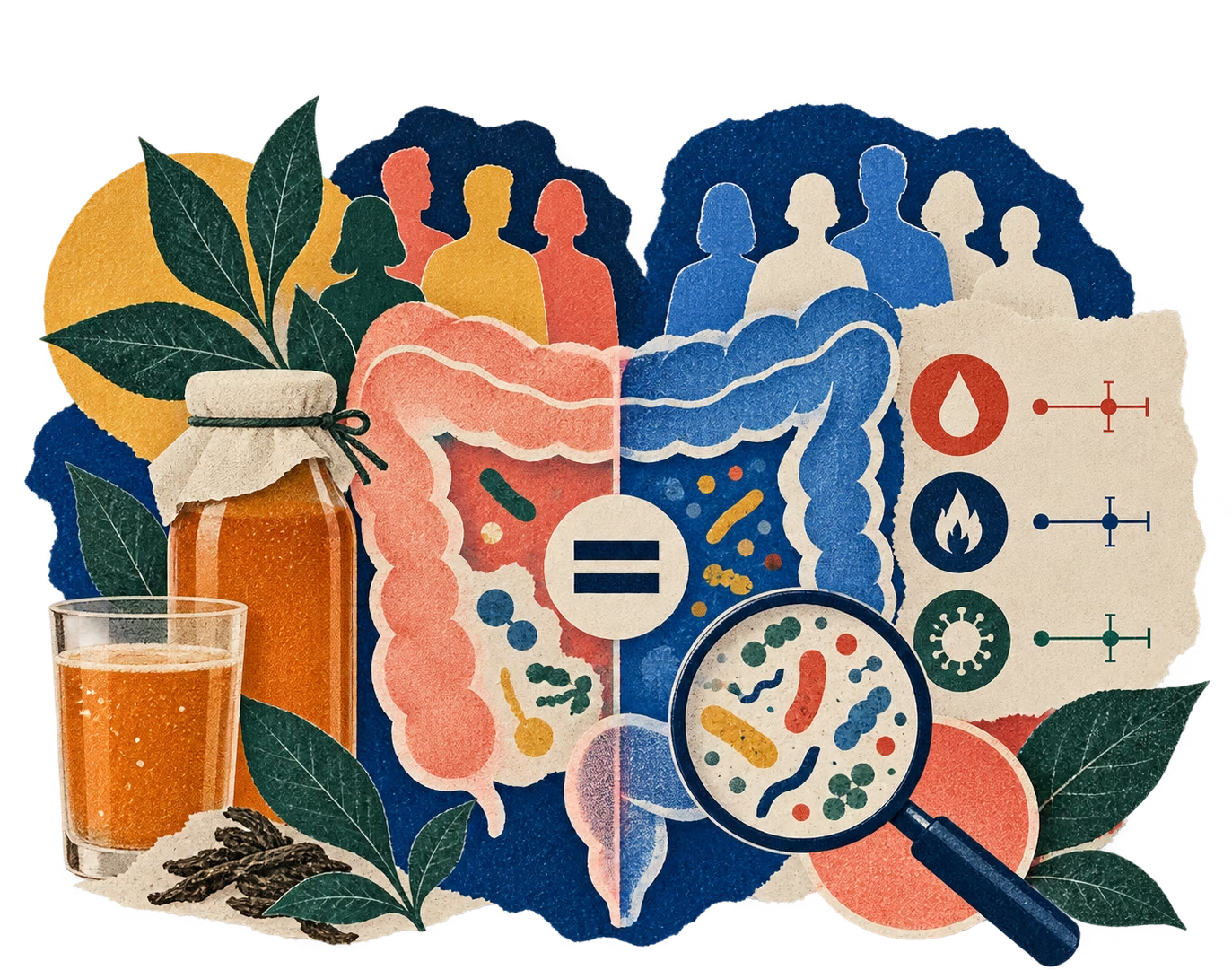
Kombucha changed the microbial mix, but a change in microbes is not the same as better health: most measures did not change.
The study, in plain language
Kombucha is a fermented drink, and the team wanted to see what happened when people drank it daily. Healthy adults in San Diego received two daily servings of kombucha, 16 ounces total, for four weeks or kept their usual diet after an initial period on a Western diet. Researchers examined gut microorganisms and some metabolic and inflammatory measures.
At the end, some microbial species differed between groups, while most health measures showed no firm difference. Within the kombucha group, fasting insulin and an indicator of insulin resistance rose from before to after, but that change could not be attributed to the drink relative to the other group. Six of the 30 people assigned were left out of the final analysis.
Digestive symptoms also occurred during consumption: diarrhea and bloating were more common in the kombucha group, and one person withdrew because of severe bloating. With a very small sample, four weeks of intervention, considerable variation among people, and diet reported by participants themselves, the study shows what changed, not that the change benefited health. It also did not measure stool consistency or substances produced by microbes, or analyze what the kombucha batch contained.
What they found
- At the end of the consumption period, groups differed in some gut microbial species.
- Most metabolic and inflammatory measures showed no firm difference between groups.
- Fasting insulin rose in the kombucha group, but that before-and-after change cannot be attributed to the drink.
How they studied it
Healthy adults in San Diego were randomized to four weeks of two daily servings of kombucha, 16 ounces total, or their usual diet after an initial Western-diet period. Of 30 people assigned, 24 were included in the final analysis. The team studied gut samples and health markers.
What the study cannot show
- Very small sample, four-week intervention, substantial individual variability, and participant-reported diet. The study did not measure stool consistency or microbial metabolites, or characterize the batch’s microbiological or chemical components.
- It does not show that kombucha improves digestive health, inflammation, or metabolism, or identify which change in microorganisms living in the body would be beneficial. Results do not establish long-term effects or generalize to people with illness.
Something to think about
When a claim talks about changes in gut microbes, did anything in health change too? Here, the mix changed, while most health measures showed no firm difference.
The original study
Modulating the human gut microbiome and health markers through kombucha consumption: a controlled clinical study
Source under CC BY 4.0. English adaptation and explanation by PaperFlow, with AI assistance. The text has been reorganized for a general audience; it is not the complete paper and does not imply endorsement by its authors.
One study alone does not represent a field's consensus. Educational content does not replace professional advice. Report a possible error.